The Schmidt-Gentner Era: A Lost Musical Legacy, 1920-1930
There is a growing body of scholarship on the theory, practice, and reception of silent film music in Weimar Germany.1 So too have film scores by (among others) Giuseppe Becce, Hans Erdmann, Paul Hindemith, Gottfried Huppertz, Eduard Künneke, Hans Landsberger, Edmund Meisel, and Wolfgang Zeller been restored, performed, and recorded. Missing from this cultural revival, however, is the most popular and prolific figure of Weimar film music: Willy Schmidt-Gentner (1894-1964). Music director of the largest movie palaces in Berlin, he arranged and conducted hundreds of film scores across 1920-30. Indeed, Alfred Rosenthal defined this golden age of illustrative music as “the Schmidt-Gentner era.”2 Yet the only work by or on Schmidt-Gentner available today relates to his sound films.3 Even the biography written by his second wife, Stefanie Job, provides scant evidence of his early years.4
This essay is therefore the first detailed account of Schmidt-Gentner’s career in the silent era. Using new evidence from a range of primary and secondary sources, I reconstruct his journey from jobbing musician to pre-eminent music director. As well as offering a history of Schmidt-Gentner’s work across 1920-30, I hope to indicate the kind of music he wrote and how it was received. My aim is to posit Schmidt-Gentner as a major figure within Weimar cinema, and to promote further investigation into his musical legacy.
Making a name: 1920-1923
“Willy Schmidt-Gentner” was a creation of Weimar Germany. Born Friedrich Wilhelm Schmidt in the village of Neustadt am Rennsteig, Thuringia, his musical talents led him to Meiningen and the tutelage of composer Max Reger. Schmidt was set to become first violinist of the Meininger Hofkapelle when war broke out in 1914. On the Eastern Front, he sustained a serious wound to his left hand and was invalided to Berlin in 1918. Forced by his injury to abandon the violin, after the war Schmidt earned money as a tax auditor, inspecting venues to determine what music was being performed. According to Stefanie Job, this role led him into contact with a Berlin property developer who engaged him at a small cinema as a pianist, then as a conductor and arranger of film music.5
Details of this venue are not recorded by Job; still without a name, it is located on Müllerstraße by Hanns Brodnitz and on Seestraße by Werner Schmidt-Boelcke, who claims the budding accompanist led a five-man ensemble there in 1920.6 Only one cinema fits these details: the Apollo-Lichtspiele at the intersection of Müllerstraße and Seestraße.7 This housed approximately 400 seats and was owned by Leo Czutzka, a property developer who also fits Job’s description. Under his stewardship, Czutzka & Co. was registered as undertaking the “operation and acquisition of cinemas, variety theatres, and theatrical organizations.”8 Across Berlin in 1920-1, this company also took over the Alfa Hauptstraße, the Alhambra Koppenstraße, and the Alhambra Badstraße—as well as leasing the Fürstenhof-Lichtspiele in Dresden.9 With around 400 seats, the Apollo-Lichtspiele was a modest variety theatre, attached to a tavern in the predominately working-class district of Wedding. (The original owners were listed as innkeepers and since 1915 their property had been subject to several court orders for sale.) This district was nicknamed “Red Wedding” for its leftwing politics, and the only adverts I have found for the Apollo-Lichtspiele feature in the socialist newspaper Freiheit. These offer a brief window into the films scheduled during May-June 1920. Indische Rache (1920) is the sole recent release; the rest are German and American films from 1915-18. The only musicians cited are guest performers, such as the vocal soloists and choir that accompanied Die Glocke (1917) and Klovnen (1917). Since no new films were shown there, the Apollo-Lichtspiele attracted no reviewers. If, as Job suggests, Willy Schmidt’s performances increased the popularity of the venue, evidence of his first year in cinema remains obscure.
Recognition came thanks to the ambitions of Czutzka & Co. The company’s first major project was the renovation of the Apollo-Lichtspiele. After designs by architect Max Bischoff, the interior was refitted and expanded to accommodate over 1000 seats.10 Under its new name of the Alhambra, the cinema reopened in September 1921 with a gala screening of Danton (1921), followed by a stage comedy and a performance of Franz von Suppé’s operetta Die schöne Galathée. The “excellent orchestra” gained special mention in the local press, though its conductor went unnamed.11
Following this successful relaunch, Czutzka’s next project targeted a much more glamorous neighbourhood: the Kurfürstendamm boulevard. Reported as “the first theatre built in Berlin after the war,” construction of Czutzka’s new cinema at Kurfürstendamm 68 encountered material shortages and rising inflation, leading to a final cost of 15 million reichsmarks (RM).12 Like its predecessor in Wedding, this new cinema was called the Alhambra. (Czutzka even reregistered his company as “Alhambra Brandenburg.”13) With its classical exterior and sleek, silver-grey interior, this was a model for multimedia exhibition. Designed by Bischoff and Fritz Wilms, the auditorium boasted 1200 seats and was equipped with the latest technology. A retractable screen measuring 6x8 metres (then the largest in Berlin) could be lowered before the stage, while at the rear of the hall a booth contained three projectors. For music, there was a new concert organ and a sunken pit to accommodate a 40-piece orchestra.14
This was a superb position for an ambitious Kapellmeister. Amid the material transformations of theatrical Berlin, Willy Schmidt also sought to rebrand himself. After his marriage to Katharina Gentner—a nurse he met in hospital—he affixed her surname to his. Thus distinguished, Willy Schmidt-Gentner makes his first documented appearance in film history as the music director of the Alhambra Kurfürstendamm. The cinema opened on 23 February 1922 with a programme of music, film, and theatre. Massenet’s overture Phèdre was followed by a dramatic prologue written by Hans Brennert and performed by Alfred Abel. Then came a short film (Ums Nordkap ins Weiße Meer, 1921), a feature (Des Lebens und der Liebe Wellen, 1921), and—per the gala opening in Wedding—Suppé’s Die schöne Galathée.15
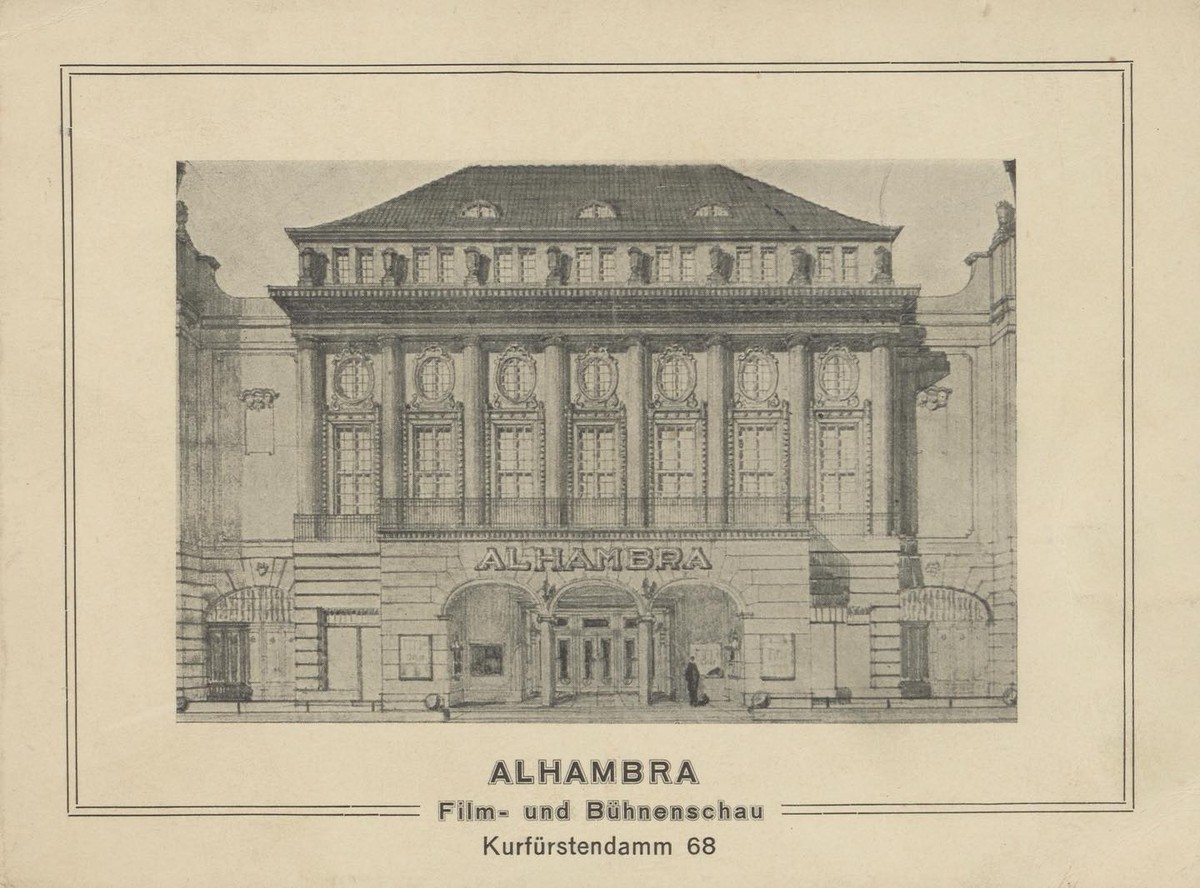
Figure 1. The Alhambra Kurfürstendamm. Public domain/Wikipedia.
In his eighteen months at the Alhambra Kurfürstendamm, Schmidt-Gentner presided over dozens of similar programmes. Alongside numerous short films, he compiled music for approximately 50 features and conducted at least as many operetta and singspiel performances. There were also theatrical dramas, often with incidental music, and stage comedy. Unlike his earlier work at the Apollo-Lichtspiele, the films shown at the Alhambra were mostly new releases and did attract critical attention—together with Schmidt-Gentner. As before, however, his name did not feature in adverts for the Alhambra Kurfürstendamm. Only when guest performers augmented the usual orchestra did publicity focus on music, such as the addition of a Russian balalaika ensemble for screenings of Die Gezeichneten (1922).16 Occasionally films made way entirely for touring live acts, like the fortnight of ballet performances by Russian dancer Alexander Gavrilov and his company in August 1922.17
The Alhambra Kurfürstendamm was prestigious enough to host two notable film premieres in this period: Karl Grune’s Der Graf von Charolais (1922) and Manfred Noa’s Nathan der Weise (1923). Between such prestigious events, the Alhambra was primarily geared toward popular tastes. Thus Schmidt-Gentner compiled music for films across numerous nationalities, styles, genres, and lengths. As well as the latest releases of German features, there were rereleases of older productions starring popular figures like Emil Jannings, Harry Liedtke, Pola Negri, and Henny Porten. There were also imported films by Yakov Protazanov and Ivan Mosjoukine, together with American productions from Fox and Universal. The shorts, too, came in every genre, from travel documentaries to cultural films, from children’s films to slapstick. Schmidt-Gentner found music to match everything from Brownie the Wonder Dog to Carl-Theodor Dreyer, from Fatty Arbuckle to Arnold Fanck.
The sheer volume of content sometimes caused problems. In February 1923, the Alhambra programmed a week of Charlie Chaplin shorts. To squeeze four into the first half of each afternoon, the films were projected so fast that audiences complained to the management.18 There were also critical reservations about the number of American imports, which represented a quarter of features shown at the Alhambra in 1922-3, as well as a high percentage of shorts. In contrast to Schmidt-Gentner’s first cinema in working-class Wedding, the Alhambra Kurfürstendamm was conscious of its role in the international film market. Freiheit had been the only newspaper to advertise the former Apollo-Lichtspiele; but in July 1922, the paper’s critic found himself deliberately excluded from a premiere at the Alhambra Kurfürstendamm for fear of conflict with the invited guests from Hollywood.19 Others were concerned by American films bearing anti-European sentiment. Reviewing the presentation of Erich von Stroheim’s Blind Husbands (1919) at the Alhambra in August 1922, Fritz Olimsky asked: “Isn’t it the height of tastelessness, not to say national indignity, that we allow ourselves to be subjected to such things in German cinemas?”20
In this context, it is striking that Job credits Schmidt-Gentner’s critical breakthrough to the Berlin premiere of an American production.21 Contemporary reports indicate that this was in fact an extended presentation of films in July 1922, personally presented by William Fox. Five features—A Child of the Wild (1917), Over the Hill to the Poorhouse (1920), Shame (1920), The Queen of Sheba (1921), Nero (1922)—were shown together with a selection of shorts. The programme—especially The Queen of Sheba—was received as an indicator of American prowess, but the accompaniment was heralded as a demonstration of German musical skill.22 Schmidt-Gentner’s scores impressed Fox himself, who personally rewarded the Kapellmeister with $100 at the celebratory dinner—a small fortune in hyperinflation Germany.23
The Fox programme heralded more regular citations of Schmidt-Gentner in the press, though detailed accounts of the musical contents of his scores are scant. An exception is Der Graf von Charolais, which premiered at the Alhambra in September 1922. This production was well received for its design and performances, but so too was Schmidt-Gentner’s music for its dramatic role. This “strikingly colourful” score was “instrumentally inventive, rich in ideas,” its motifs “characterizing every action” on screen.24
Most impressed was the reviewer of Der Kinematograph, who raved over this “impeccable, stylish, and nuanced musical score, truly on par with the film.” Conscious that the musical effects are “so numerous, so varied, that only a recitation of the entire film would truly suffice,” this account nevertheless tries to suggest how the score functioned. The drama is set in the Middle Ages, but Schmidt-Gentner sought to balance old and new musical elements. Thus, Der Kinematograph detected “a modern shimmy sound” in one scene, but it was orchestrated so that “bassoon and trombone figures” stood out more “in the foreground than the modern instrumentation appropriate to the piece.” In the scene of a triumphant feast, these musical figures—with their faintly archaic sound—caught the movement of the jester and “boisterous dancers” on screen.25
These details illustrate the way that, even if Schmidt-Gentner’s cue sheets survived, the treatment of specific cues would not be evident without the score itself. The review demonstrates this point by citing how Schmidt-Gentner used the opening of the Egmont overture at a tempo that directly contradicted Beethoven’s instructions. The music was thus adapted “to the emotional pace of the scene,” but also in a way “that the melody recedes behind the characteristic gliding figures, behind the voice [of the original] instruments.” More than a compilation of existing music, Schmidt-Gentner’s score also contained original passages. Taking his cue from the screen, he not only composed fanfares and drumrolls but made sure they “resonated through the following scene, in the piano, so that the spectator was still reminded of the logical development of the scene that followed.” The reviewer had the impression “that no single piece of music lasts longer than eight bars,” so closely did Schmidt-Gentner’s score follow the film. As such, it was an “immense intellectual achievement,” the success of which rivalled the filmmaker. “No director, not even Karl Grune, could conjure such excitement.”26 Recognizing that only the detailed list of music cues would demonstrate Schmidt-Gentner’s “incredibly laborious” assembly, the reviewer promised to reproduce this document in a forthcoming issue of Der Kinematograph. Frustratingly, this precious evidence never appeared.
The fate of Schmidt-Gentner’s score for Der Graf von Charolais is emblematic of the problems faced in studying his career. The interests of contemporary critics do not align with those of modern scholars. Entertainment at the Alhambra was varied and attention was not always on film. In March 1922, for example, one critic spent more time discussing the performance of Edmund Eysler’s singspiel Der König heiratet than Der Mann aus Zelle 19 (1922), the film that preceded it.27 Film music was often taken for granted and not mentioned at all. Even when a score was discussed, its authorship and content remain frustratingly undetailed. For the premiere of Hanneles Himmelfahrt (1922), Alexander Schirmann arranged music by Humperdinck, Palestrina, Pfitzner, Schubert, and Tchaikovsky for the choir and orchestra of the Preußische Staatsoper. Der Kinematograph hoped that other cinemas would use this score, including the “excellent orchestra” and “capable conductor” at the Alhambra, where the film was released ten days later.28 Yet reviews of these screenings credit the “excellent music” exclusively to Schmidt-Gentner.29 Was this his own compilation, or a rearrangement of Schirmann’s work? Without the music itself, such questions cannot be answered. Weimar’s cultural hierarchy contributes to this problem. Max von Schillings was intendant at the Staatsoper, where he conducted the premiere of Hanneles Himmelfahrt. As an important figure in Berlin’s musical life, his name was used to advertise the event; Schirmann’s name is absent from contemporary adverts for the premiere—and from modern databases. Such was the fate of most film music, and most film musicians.
In this context, the music director of the Alhambra became something of an exception. In an era of anonymous cinema musicians, he made a name for himself with remarkable speed. By the end of 1922, Der Kinematograph was already referring to him as “the famous Kapellmeister Schmidt-Gentner.”30
Building a reputation: 1923-1925
In July 1923, the Alhambra Kurfürstendamm—“one of Berlin’s most beautiful and largest cinemas, in a prime location”—was leased to Deulig-Film, a production company that was expanding into the field of distribution.31 (Czutzka’s cinema concerns were waning; by the mid-1920s his company was no longer extant.) At this juncture, Schmidt-Gentner quit the Alhambra and became Kapellmeister of Berlin’s Meinhard-Bernauer theatres.
Austro-Hungarian émigrés Carl Meinhard and Rudolf Bernauer had built their respective careers on and behind the stage. Working variously as actors, librettists, and managers, by the early 1920s they owned a series of theatres in Berlin. In July 1923, they won a court case against Herman Haller that enabled them to assume management of the Theater am Nollendorfplatz.32 This was located at the centre of the busiest and most glamorous cinema district in Berlin, at the intersection of several major streets at the Gedächtniskirche. Schmidt-Gentner had only to follow the Kurfürstendamm to its starting point to reach his new employment. On the ground floor was the building’s titular main stage, the Theater am Nollendorfplatz; upstairs was the Mozartsaal, built as a concert hall but since 1911 used as a cinema.
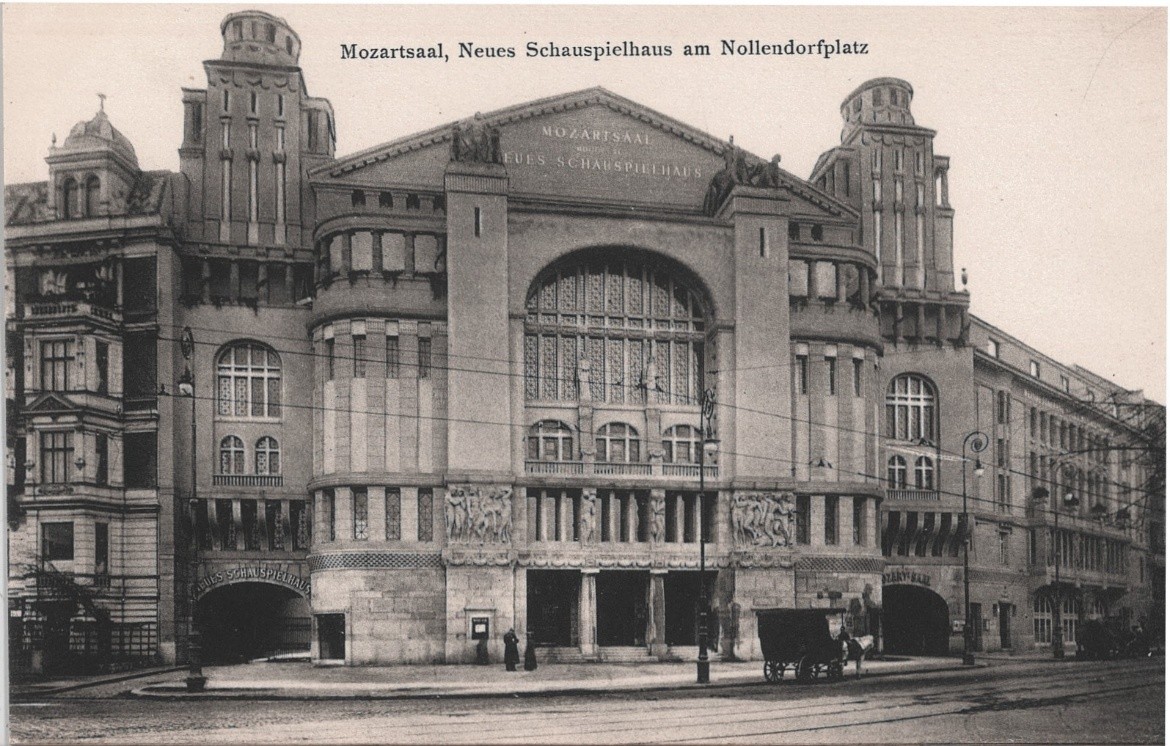
Figure 2. The Theater am Nollendorfplatz, which also housed the Mozartsaal. Author’s collection.
Meinhard-Bernauer engaged an ambitious creative team for their latest enterprise. The manager of the Mozartsaal was Hanns Brodnitz, who had encouraged his employers to secure the venue—and had grand ambitions for its potential. Benno von Arent was responsible for publicity designs and the staging of live performances.33 Werner Schmidt was engaged as Schmidt-Gentner’s musical assistant and, inspired by his double-barrelled mentor, eventually renamed himself Schmidt-Boelcke. All these figures were in their late teens or early twenties, and all would have significant careers. Among them, Schmidt-Gentner was the most experienced and best known. Remarkably, he moved from the Alhambra to the Mozartsaal “with most of his orchestra”34—evidence that these musicians had built a strong sense of identity with him. Perhaps they also sensed greater opportunities ahead. Unlike the Alhambra, the Mozartsaal was part of an established group of venues at the heart of Berlin entertainment. Until the Meinhard-Bernauer takeover, the Mozartsaal had been run by Ufa, the dominant force in German film production and distribution. Rudolf Bernauer recalled wanting to make better use of this venue than the previous owners, transforming the theatre into an exclusive site for film premieres.35 The Mozartsaal’s opening season was promoted in precisely this way, promising the “Berlin premiere” of several Fatty Arbuckle films, the “German premiere” of My Boy (1921), and the “world premiere” of major German productions like Zwischen Abend und Morgen (1923), I.N.R.I. (1923), and Raskolnikov (1923).36
Under Brodnitz’s management, the Mozartsaal quickly became known for its “large scale propaganda campaigns” to gain public attention. For every premiere, the venue was “half rebuilt”: every available space outside and inside was utilized to sell the moviegoing experience.37 In May 1924, Fritz Olimsky marvelled at the razmataz surrounding Blood and Sand (1922):
The Mozartsaal’s management can once again boast a major success with this film, one that shouldn’t be attributed solely to the lavish production. They’ve certainly mastered the art [of presentation]: American slapstick, ushers dressed as bullfighters, twenty gramophones playing the Valentino foxtrot nonstop in the foyer and on the stairs, the anterooms adorned with colourful decorations. Add to that the bullfighter’s song from Carmen performed on stage and the catchy accompaniment by Schmidt-Genthner [sic]. This premiere production is undeniably somewhat sensationalist, but it’s a hit.38
For the screenings of Rosita (1923) a few months later, Schmidt-Gentner’s music was part of the broader spectacle of cinematic entertainment. Displaying what one critic deemed “American generosity,” the Mozartsaal exterior was plastered with huge adverts for Lubitsch’s film, while in the foyer a “Spanish” band played music. The special effects continued into the performance space, where Schmidt-Gentner’s overture was accompanied by a coloured lantern projection on the hall’s ceiling.39
Schmidt-Gentner was himself becoming a major attraction. Brodnitz saw in him a fellow showman. He reported how the conductor’s eccentric performances of familiar music—exaggerated tempi, distorted dynamics—was a winning formula. So too was his method of citing major composers, old and new: he delighted in the “audacious” employment of music by Mozart, Beethoven, Debussy, Stravinsky, and Richard Strauss. Brodnitz credited Schmidt-Gentner with “saving any number of films from failure through the verve of his musical energy.”40 The Mozartsaal duly sold screenings through their star conductor. Advertisements more regularly feature his name in an exclamatory slogan that would become a trademark: “Schmidt-Gentner dirigiert!” Premieres involved greater musical content, from pre-film stage performances to concert pieces. A year after The Queen of Sheba had been shown to the Berlin press at the Alhambra in 1922, it received its first public performance at the Mozartsaal in September 1923. While the film had been reduced in length, Schmidt-Gentner’s musical presentation expanded. The gala performance began with extracts from the grand opera repertoire, including arias and duets from L’Africaine, Don Carlos, and Aïda. The film itself was accompanied by Schmidt-Gentner’s musical arrangement, which was (once again) highly praised.41
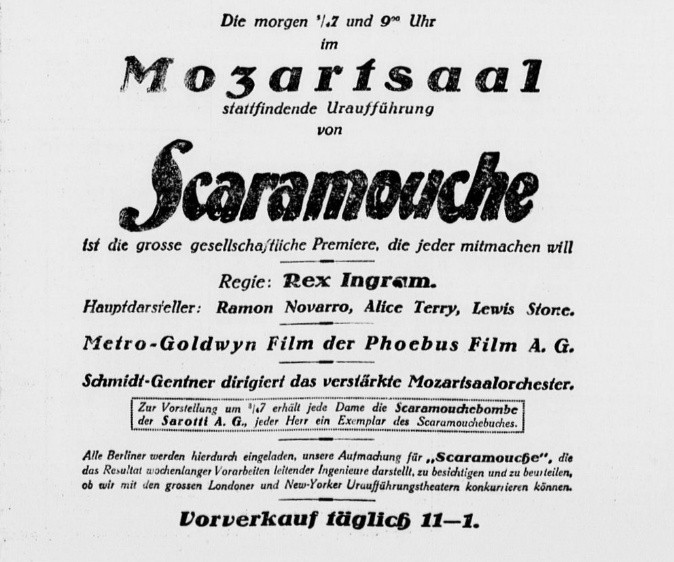
Figure 3. Advert for Scaramouche. Deutsche allgemeine Zeitung (6 December 1924).
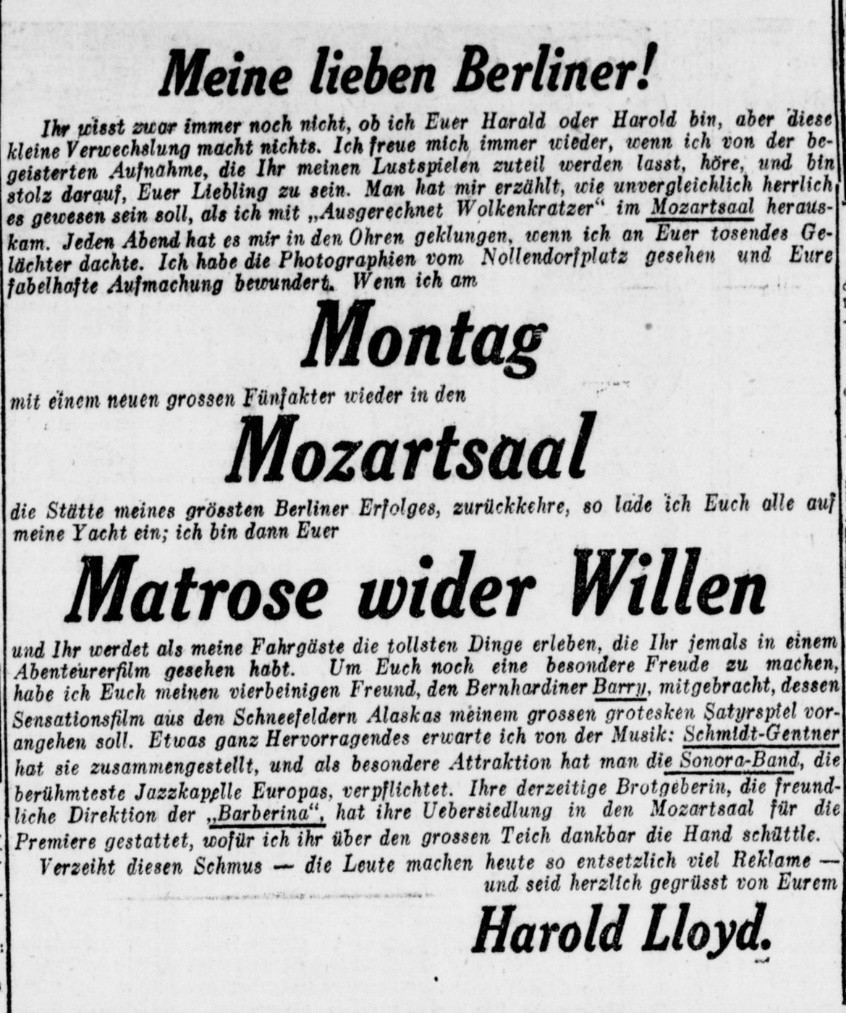
Figure 4. Harold Lloyd endorses Schmidt-Gentner’s music for A Sailor-Made Man (1921), augmented at the premiere by the British jazz band Sonora (then resident at the Barberina nightclub, Berlin). Berliner Tageblatt und Handels-Zeitung (11 January 1925).
The Mozartsaal’s presentation strategy was an immediate success. Within a few months of the new management, the daily income of Meinhard-Bernauer film screenings was ten times that of their theatres.42 Such was the popularity of screenings in the Mozartsaal that the ground floor auditorium of the Theater am Nollendorfplatz was soon pressed into use as a cinema. During Schmidt-Gentner’s tenure, the Mozartsaal presented at least 65 features, two serials, and two “comedy weeks” of short films; the Theater am Nollendorfplatz hosted at least 28 film programmes. Serials and multi-part feature films—such as the two-part Gösta Berlings saga (1924)—were usually split across both theatres. When Safety Last! (1923) was extended for a second week, demand was so high that extra screenings were put on at another Meinhard-Bernauer venue. “Every visitor to the Mozartsaal who cannot get a seat due to overcrowding will be transported to the Komödienhaus free of charge by bus,” adverts promised.43
A prime example of how complex this juggling of programmes—and musicians—could be is the exhibition of The Great White Silence (1924), the film documenting Captain Scott’s fateful voyage to the South Pole. The film premiered in the Mozartsaal, accompanied by the 160 voices of the Berliner Liedertafel, directed by Max Wiedemann. At the same time, in the Theater am Nollendorfplatz, Schmidt-Gentner conducted his scores for Au secours! (1924) and Orlacs Hände (1924). His assistant Schmidt-Boelcke also took part in this programme, acting as soloist in a performance of Tchaikovsky’s Piano Concerto No. 1 that formed the entr’acte—and neatly foreshadowed the plot of Orlacs Hände.44 Yet Schmidt-Gentner had also prepared music for subsequent performances of The Great White Silence, a film so popular that it was projected daily four times downstairs (in the Theater am Nollendorfplatz) and four times upstairs (in the Mozartsaal) for six weeks. (There was even a benefit screening for actors and staff employed by Berlin theatres.45) Sold out at every performance, demand was such that the film was eventually leased to the Richard Oswald-Lichtspiele—along with Schmidt-Gentner, who assembled a new accompaniment for “a specially assembled chamber orchestra.”46 (Kurt London recalled this score consisted primarily of Beethoven: “The effect was magnificent.”47)
During this two-month period in early 1925, Schmidt-Gentner also oversaw the music for six other feature films and other programmed newsreels/shorts. The capacity of Meinhard-Bernauer venues being overrun, the scheduled premiere of Salammbô (1924) in the Mozartsaal in March 1925 was transferred to the Richard Oswald-Lichtspiele. Confirming details of who arranged, conducted, or performed the music for this hectic timetable is almost impossible. Though the adverts credit the Mozartsaal with leasing Salammbô to the new venue, they do not state who arranged or conducted the music. Certainly, Schmidt-Gentner’s assistant(s) must have taken on more duties. According to Heiko Bockstiegel, Schmidt-Boelcke’s first performance as a conductor was for Schatten (1923) in the Theater am Nollendorfplatz in October 1923 and his first as composer/arranger for Sporting Youth (1924) at the same venue in July 1925.48 Though the contemporary review Bockstiegel quotes is ambiguous as to Schmidt-Boelcke’s role in Sporting Youth,49 it seems inconceivable that Schmidt-Gentner did not delegate some of his extraordinary workload.
Schmidt-Gentner was involved in music for stage as well as for screen, performing in all four Meinhardt-Bernauer theatres in Berlin across 1923-5. At the Theater am Nollendorfplatz, he conducted (in addition to films) symphony concerts and “festive” musical evenings.50 At the Theater in der Königgrätzer Straße, he arranged music by Christian Lahusen and “old Spanish motifs” for a production of Tirso de Molina’s Don Gil de las calzas verdes, and conducted Mendelssohn’s incidental music for performances of A Midsummer Night’s Dream.51 At the Berliner Theater, he led performances of operettas by Hugo Hirsch (Dolly, 1923) Jean Gilbert (Zwei um Eine, 1924), and Robert Winterberg (Anneliese von Dessau, 1924).52 Since adverts do not always cite the conductor, it is impossible to know how often he led these works. But evidence suggests that—as with film premieres—Schmidt-Gentner was mobilized for significant performances during their run. In June 1925, for example, he began conducting a new operetta (Winterberg’s Der letzte Kuß) at the Komödienhaus, and a few days later led the last performance of Anneliese von Dessau with its initial cast at the Berliner Theater.53 These took place in the same week that Schmidt-Gentner oversaw the Berlin premieres of three feature films at the Mozartsaal: Weil du es bist (1925), North of Nevada (1924), and Dr. Jack (1922). No wonder that, by the end of the month, he was suffering from health issues and had to be carried to his chair in the pit of the Berliner Theater by “two stalwart men.”54
Nor did Schmidt-Gentner’s contract with Meinhard-Bernauer prevent him from additional engagements. He was hired by director Richard Oswald to arrange and conduct music at the premiere of Don Carlos und Elisabeth (1924) at the Richard-Oswald-Lichtspiele. Though LichtBildBühne praised the “excellent” score, their critic felt that “the orchestra was unfortunately far too large for the theatre on Kantstraße, which was hardly suitable as a venue for a premiere.”55 Such comments indicate that Schmidt-Gentner’s expansive scores were tailored to the scale of the Mozartsaal, a factor that would come to define his later years at Ufa. But this mode of presentation did work at other one-off events. The premiere of Die Stimme des Herzens (1924) took place at the glamorous Marmorsaal in the Hotel Esplanade. Here, critics noted that the presence of Schmidt-Gentner and his orchestra fitted—and enhanced—the “social setting” of the screening.56 This was a musician for grand occasions.
A key record of Schmidt-Gentner’s work in this period is his own account of arranging and conducting film music. Published in Das Kino-Journal in May 1924, “Zur Filmmusik” details his methods of preparation and performance. After “very intensive work […] [studying the film] down to the smallest detail,” a draft score was completed and “tested practically” at a piano rehearsal accompanying the film. Following adjustments to the length and/or tempi of cues, the score was prepared for orchestra. Then came several orchestral rehearsals, “first with the film, then without it.” “All of this requires a great deal of money and effort,” Schmidt-Getner adds, “and is only possible at a theatre that is generous enough to spend unusually large sums on music, and that knows how to properly assess the value of the musical effect.”57
Schmidt-Gentner is also clear on the nature of the “musical effect” he sought. Music should not be treated “as an independent component, separate from the film,” but as a means of intimately supporting the images: “For us, the primary concern—if I may generalize from my own perspective—is the precision and conciseness with which the orchestra reflects the events on screen without trying to push itself to the forefront at the expense of the film.” Schmidt-Gentner emphasizes the work involved to achieve this synchronicity of tone and rhythm:
It sometimes happens that an act of 500 metres contains 25 different pieces, meaning that a film has an average of 80-90 pieces. Since sometimes only a few bars from a single piece are played, the frequent changes require special attention from the orchestra. […] When performing a musical work, the tempi are determined more by the events on screen than by the markings suggested by the composer—a circumstance that places unusual demands on the orchestra’s quick reflexes and dexterity. The paramount aspect of musical illustration remains capturing the dramatic tempo and intensity inherent in the images. Therefore, film music must possess something frantic, defiantly raw, to do justice to the essence of cinematography. If film is synonymous with movement, then film music must also represent an uninterrupted chain of movements and accents.58
This “chain of movements and accents” included numerous sound-effects. Schmidt-Gentner highlights the importance of the drummer, who also handled percussive instruments. Among his arsenal were “bird whistles, trill whistles, signal whistles, locomotive whistles, whips, bells, jazz band, timpani, triangle, castanets, tambourine, gramophone, barrel organ, car horn, post horns, sirens, pistol, [glass] shards, etc.”59 To precisely time these interventions, an electric signal system operated by the conductor was installed in the orchestra pit. Schmidt-Gentner’s assistant recalled how red lights on the music stands would flash to signal the end of a cue.60 This was a performance method designed for rigorous audio-visual synchronization.
Contemporary reviews indicate how the ideas indicated in “Zur Filmmusik” were put into practice at the Meinhard-Bernauer venues. Commentators were impressed by Schmidt-Gentner’s precision, especially in the fast-paced action of slapstick films.61 This was felt not merely in the percussive effects for punches and pratfalls, but in a wider sense of dynamism: the music was as elastic as the performers on screen. During Gasoline Gus (1921), one critic observed how each situation, each action in the film, was not merely illustrated but “emphasized” by Schmidt-Gentner’s flexible score.62 Watching the charming synchronism of child star Baby Peggy and her pet dog, another critic’s delight was heighted by the way the music was “captivatingly attuned” to their every movement.63 In other genres, the score might achieve a subtler form of tonal synchronism. For the Jackie Coogan comedy-drama My Boy, Schmidt-Gentner “provided light, classical, and semi-classical melodies from the last 20 or 30 years, languid waltzes and salon pieces, but in such a subtle way that the music actually receded so far into the background that it was merely an unobtrusive means of promoting the mood.”64 By contrast, the score for the historical epic Helena, der Untergang Trojas (1924) featured extra percussion and brass instruments to create “a rarely interrupted, resounding fortissimo.”65 While their patience was clearly tested with this score, the same critic reported that only Schmidt-Gentner’s “excellent accompanying music” made Chu-Chin-Chow (1923) “bearable” to sit through.66 His score for The Epic of Everest (1924) utilized “original Tibetan melodies” to illustrate the soundscape of the film’s setting.67 The Reichsfilmblatt urged Schmidt-Gentner’s music “to be discussed in more detail” in evaluations of this film’s success.68 (Again, this discussion was not forthcoming.)
During his time at the Meinhard-Bernauer theatres, Schmidt-Gentner became a guarantor for quality. His work was taken as “proof of how essential the musical illustration is for the overall effect” of a film’s success—and a model for others to follow.69 By mid-1925, Der Filmbote was hailing the “salvation” of film music from its crude origins in “the era of shopfront cinemas.” Thanks to the “integration of the most suitable professional musicians” into “the special conditions of film music,” a high standard of presentation could now be achieved. At the Mozartsaal, co-operation between musicians and managers was key to its success: Schmidt-Gentner exemplified a “new era” of film music.70
The soul of the cinema: 1925-1928
In the summer of 1925, Schmidt-Gentner, Schmidt-Boelcke, and Hanns Brodnitz left the employ of Meinhard-Bernauer and signed contracts with Phoebus-Film. Alongside film production and distribution, Phoebus ran the 600-seat Marmorhaus, which stood in a prime location at the start of the Kurfürstendamm, among the cinemas grouped around the Gedächtniskirche. Schmidt-Gentner had already been engaged by the Marmorhaus to arrange and conduct music for the Berlin premiere of The White Sister (1923) in March 1925.71 In July-August he was conducting at both the Mozartsaal and the Marmorhaus. For his new employers he compiled music for a programme including Darwin Was Right (1924), while for his old employers he presented With the Headhunters in Papua (1923).72 From the last week of August 1925, he was officially responsible for “the musical direction of all Phoebus theatres.”73
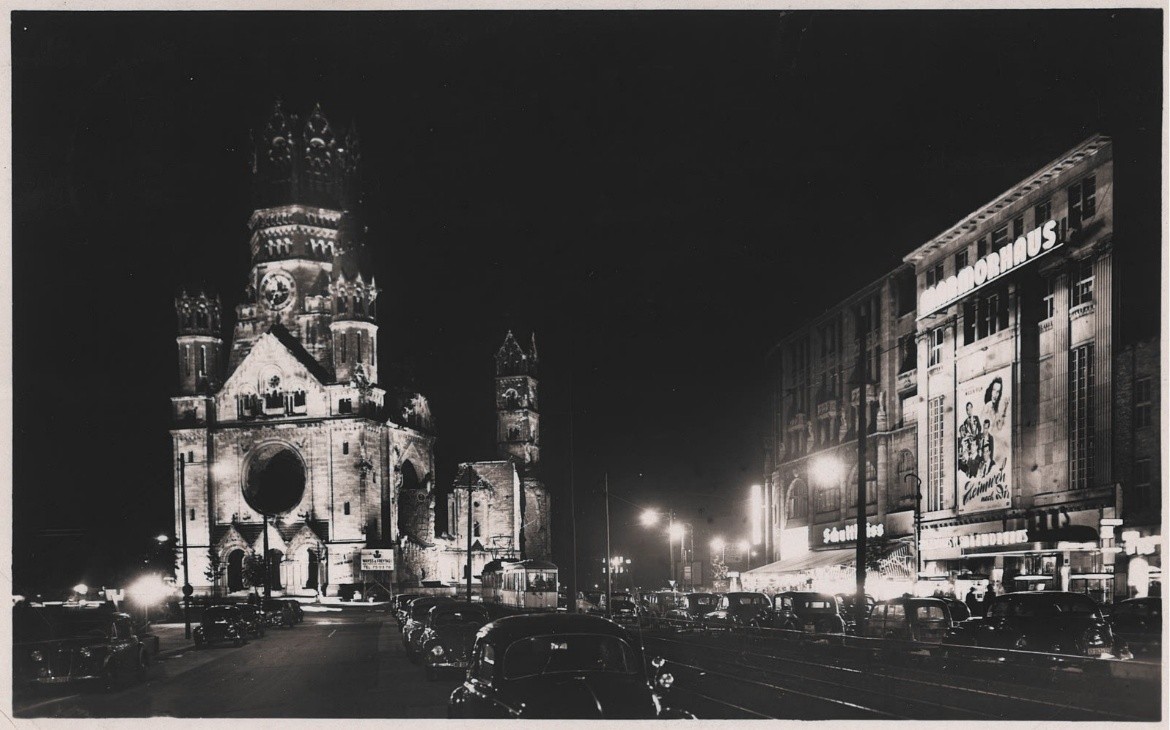
Figure 5. The Marmorhaus. Author’s collection.
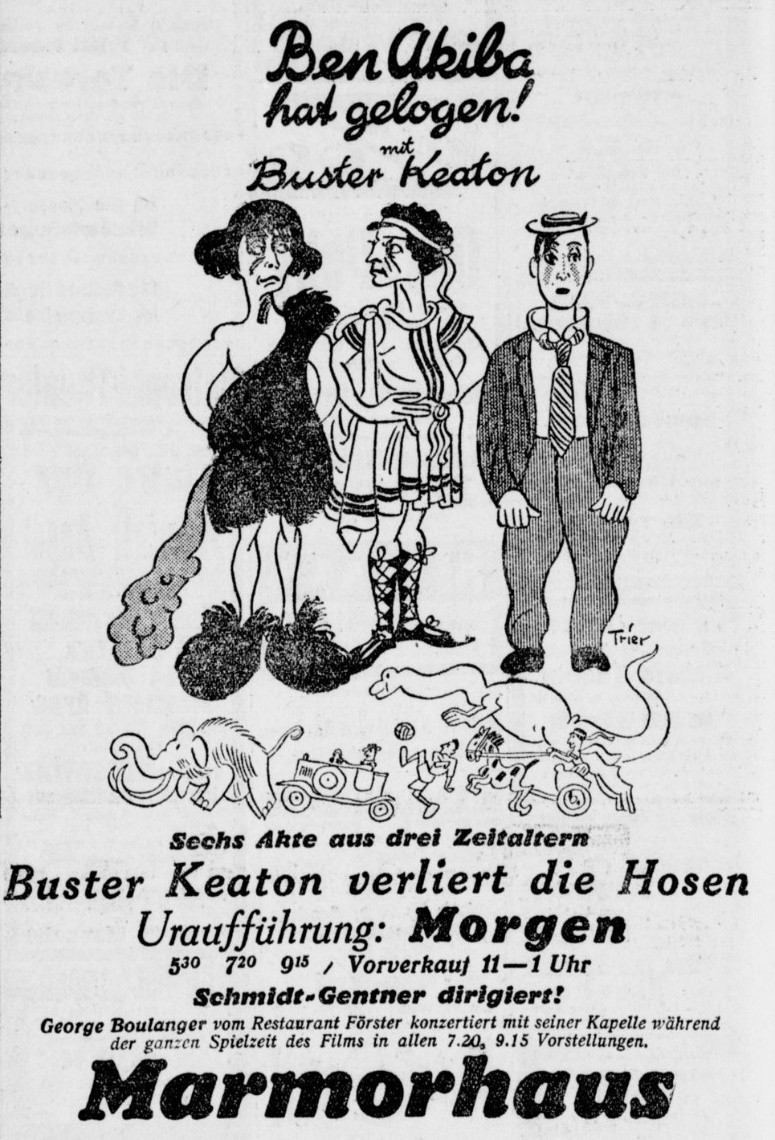
Figure 6. Advert for Three Ages. Berliner Tageblatt und Handels-Zeitung (6 September 1925).
As with his positions at the two Alhambra theatres, Schmidt-Gentner’s new contract coincided with the building of another cinema. Designed by Hans Poelzig, the Capitol was to be part of a shopping complex on the opposite side of the Gedächtniskirche to the Marmorhaus. Advertised as Phoebus’s flagship venue in Berlin, the German premieres of The Thief of Bagdad (1924) and The Gold Rush (1925) were announced before its completion. Actor Curt Bois had been engaged to provide the venue with dramatic prologues and, together with Brodnitz, wrote a revue for the gala depicting “the development of cinema from its earliest beginnings to the Capitol.”74 Construction teams worked in multiple shifts to try and finish the cinema by September, but the opening was pushed back to November, then to December.
On 20 December 1925, the Capitol finally opened. Reporters were duly impressed by its state-of-the-art lighting and air conditioning, and its spacious auditorium with 1300 seats. The orchestra platform could be lowered out of sight for film projections or raised for concert performances. There was also a large organ, a thunder machine, and other “atmospheric sounds.”75 Fritz Olimsky called Schmidt-Gentner “the soul of the whole,” since he not only conducted the orchestra but “also all the other details of the performance, from raising the curtain to [controlling] the individual spotlight effects and the regulation of the projection tempo.”76 The premiere began with Wagner’s overture to Die Meistersinger von Nürnberg, followed by Fairbanks’s film The Thief of Bagdad. For the latter, the Capitol issued a printed guide to the various motifs of Schmidt-Gentner’s grand score, which included extracts from Strauss’s Elektra and Schillings’s König Ödipus. Critics were (at best) bemused by this juxtaposition of Hollywood swagger and Wagnerian music-drama.77 Was the Capitol to showcase German or American art?
The latter was certainly evident in subsequent months, which saw the exhibition of The Gold Rush, A Woman of Paris (1923), and The Iron Horse (1924). This run was capped in May 1926 by the personal appearance of Mary Pickford and Douglas Fairbanks at a benefit performance of Little Annie Rooney (1925). The American press reported that Schmidt-Gentner’s orchestra played “The Star-Spangled Banner” in Berlin for the first time since the war, after which the audience stood and applauded.78
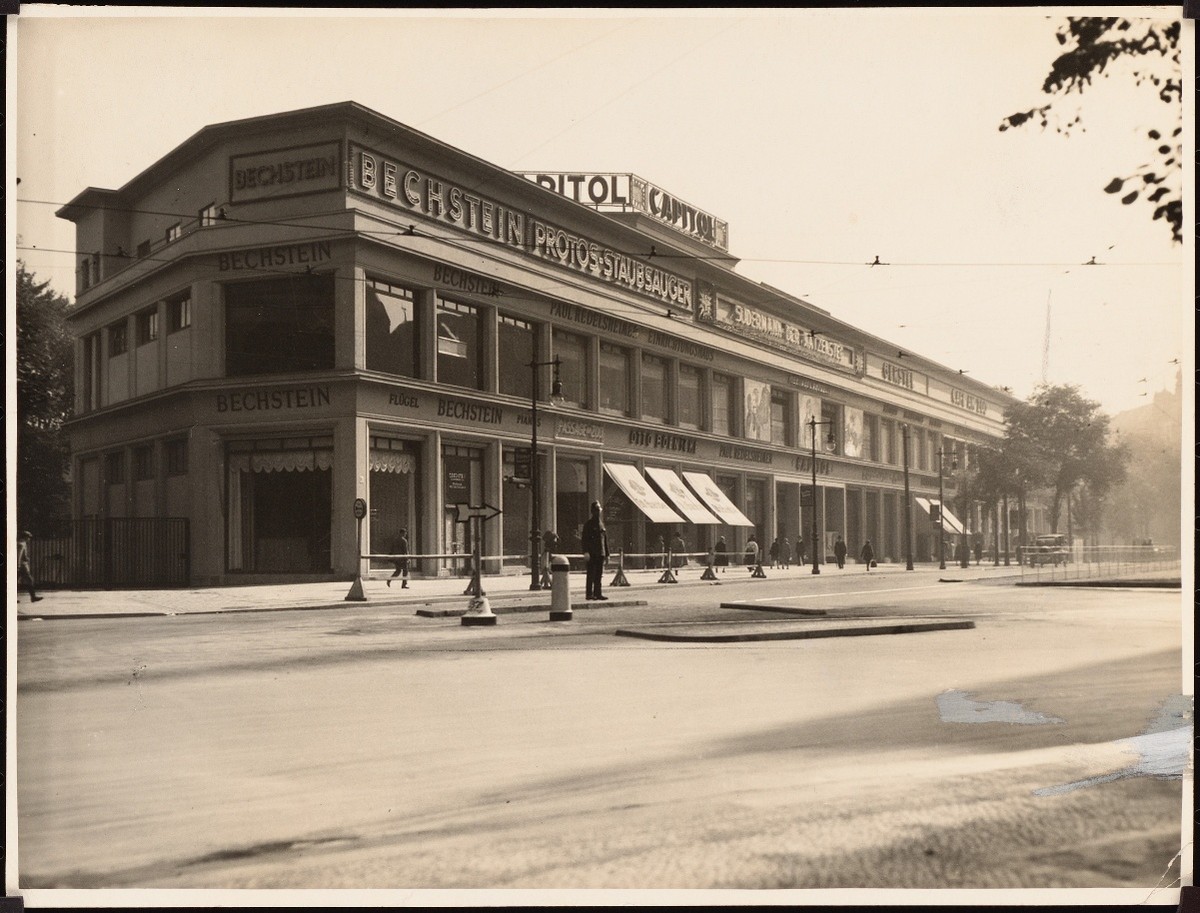
Figure 7. The Capitol. Public domain/Architekturmuseum der TU Berlin, Inv. Nr. F 1666, https://doi.org/10.25645/mfr4-hxyp.
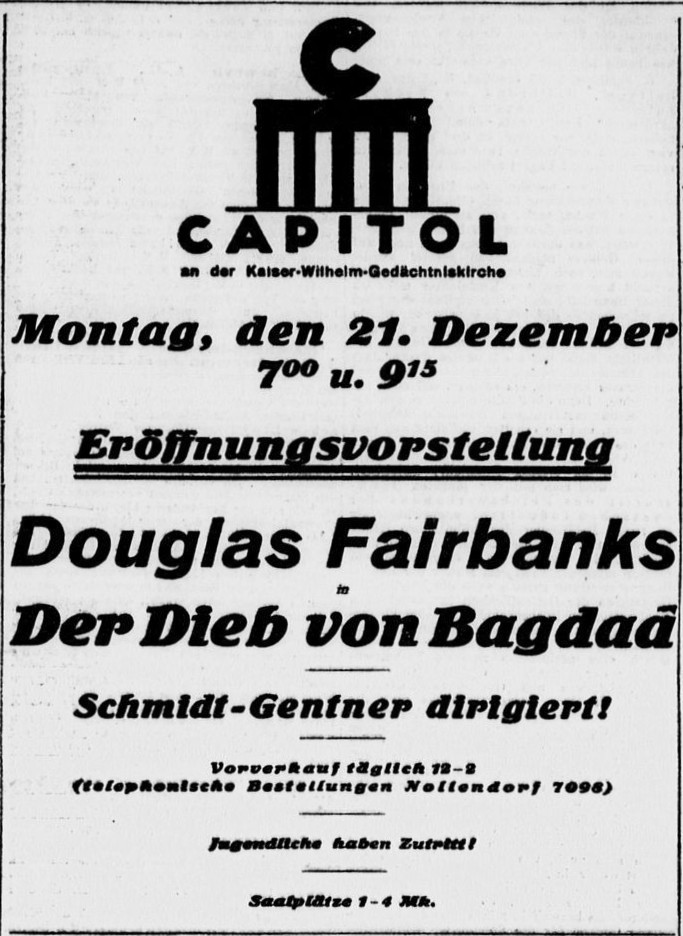
Figure 8. Advert for The Thief of Bagdad. Deutsche allgemeine Zeitung (20 December 1925).
Though Schmidt-Gentner was primarily associated with the Capitol, both he and his work were increasingly present outside Berlin. Even as the Capitol was under construction, he conducted The Thief of Bagdad at the Theater Schauberg in Cologne, then again at the opening of the Capitol in Dresden.79 Meanwhile, in November 1925, his score for Scaramouche (written for the Mozartsaal in 1924) was being performed at the Palast-Lichtspiele in Karlsruhe.80 The following year, the Künstlertheater Apollo in Mannheim engaged a Berlin jazz band to augment local forces and perform Schmidt-Gentner’s score for Our Hospitality (1923) (first performed at the Marmorhaus).81 The composer himself visited the Künstlertheater Apollo to present The Isle of Lost Ships (1923)—along with (as adverts promised) a “Big orchestra!”82 For the opening of another Phoebus cinema in Kiel, Schmidt-Gentner and a group of musicians travelled from Berlin to accompany an avant-premiere of Das Abenteuer der Sibylle Brant (1925).83 In June 1926, La croisière noire (1926) premiered at the Capitol in Berlin; a week later, Schmidt-Gentner performed his same score in Munich.84 The latter formed part of the first season of films shown at the Deutsches Theater, newly refitted to attract cinema audiences—and exploiting Schmidt-Gentner as a star attraction.85 He led the “augmented” forces of the theatre’s orchestra in a programme of newsreels, acrobatic acts, and films, including La croisière noire and Medvezhya svadba (The Bear’s Wedding, 1925). Local critics wrote that his “exemplary accompaniment, […] superbly coordinated” should serve as “a lesson” for other cinemas in Munich.86
In late 1926, Phoebus consolidated its position as a major exhibitor by building two more large cinemas. The 1300-seat Phoebus-Palast in Berlin was part of a new shopping centre on Königgrätzer Straße (now Stresemann Straße), opposite the Anhalter Bahnhof. It opened on 20 December with the premiere of Dagfin (1926), accompanied by Schmidt-Gentner and his orchestra. Two days later, Schmidt-Gentner conducted this score at the opening of the 2500-seat Phoebus-Palast in Munich.87 Thereafter, the role of musical director of this venue was assumed by Schmidt-Boelcke, whose training under Schmidt-Gentner made him the perfect home-grown talent for Phoebus.88
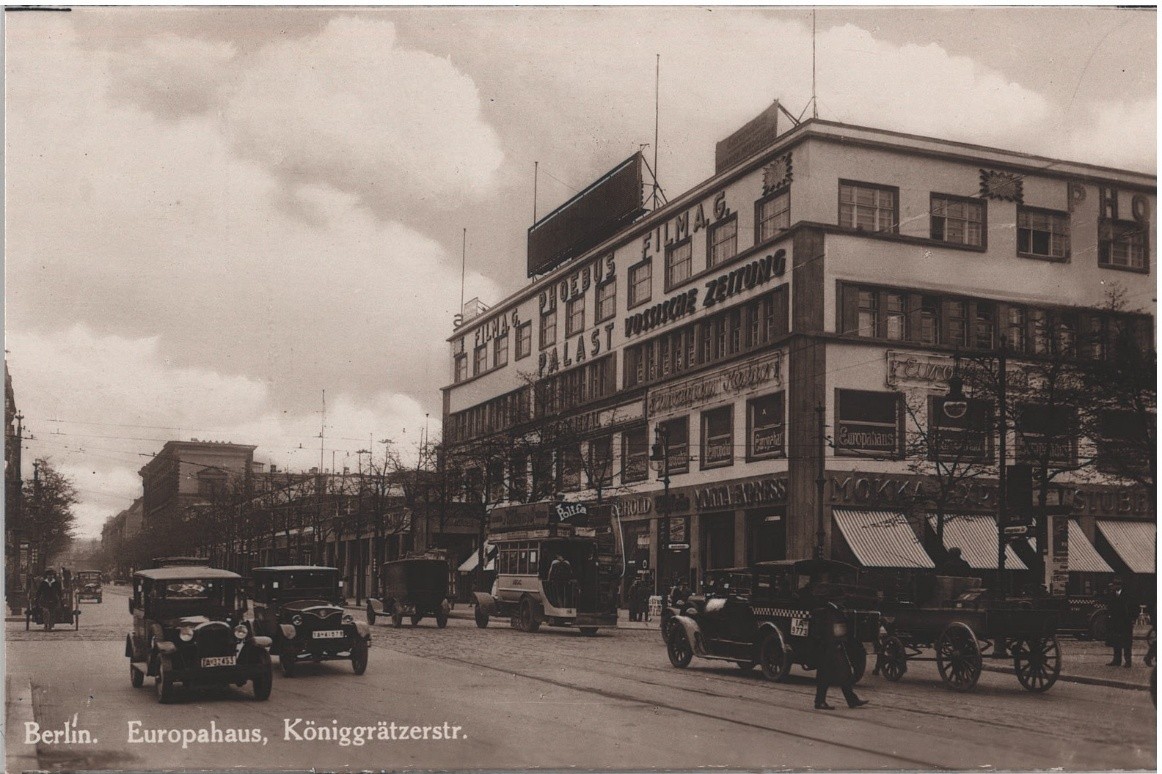
Figure 9. The Phoebus-Palast. Author’s collection.
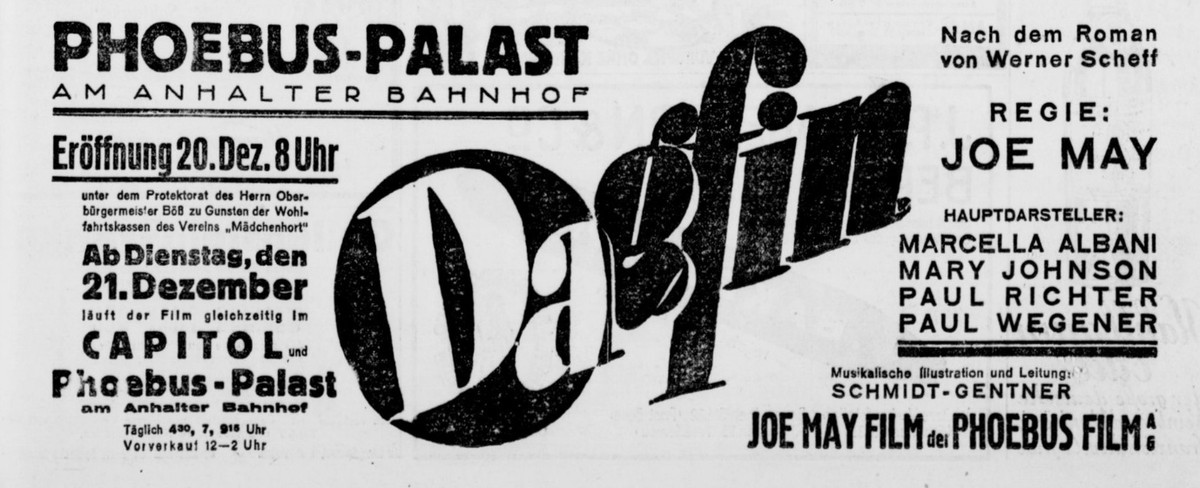
Figure 10. Advert for Dagfin. Berliner Tageblatt und Handels-Zeitung (17 December 1926).
There was more than enough to keep Schmidt-Gentner occupied in Berlin. During his time with Phoebus, over 120 feature films were shown in their three major cinemas. Roughly two-thirds of these were German, the other third being dominated by American productions. There were also notable imports from France (Napoléon, vu par Abel Gance, 1927) and the USSR (Mat (Mother), 1926; Konets Sankt-Peterburga (The End of St Petersburg), 1927). Just as Phoebus balanced national and foreign films, so Schmidt-Gentner’s music was ably attuned to popular national and local tastes. The greater attention to his work of this period allows a clearer sense of the content of his scores.
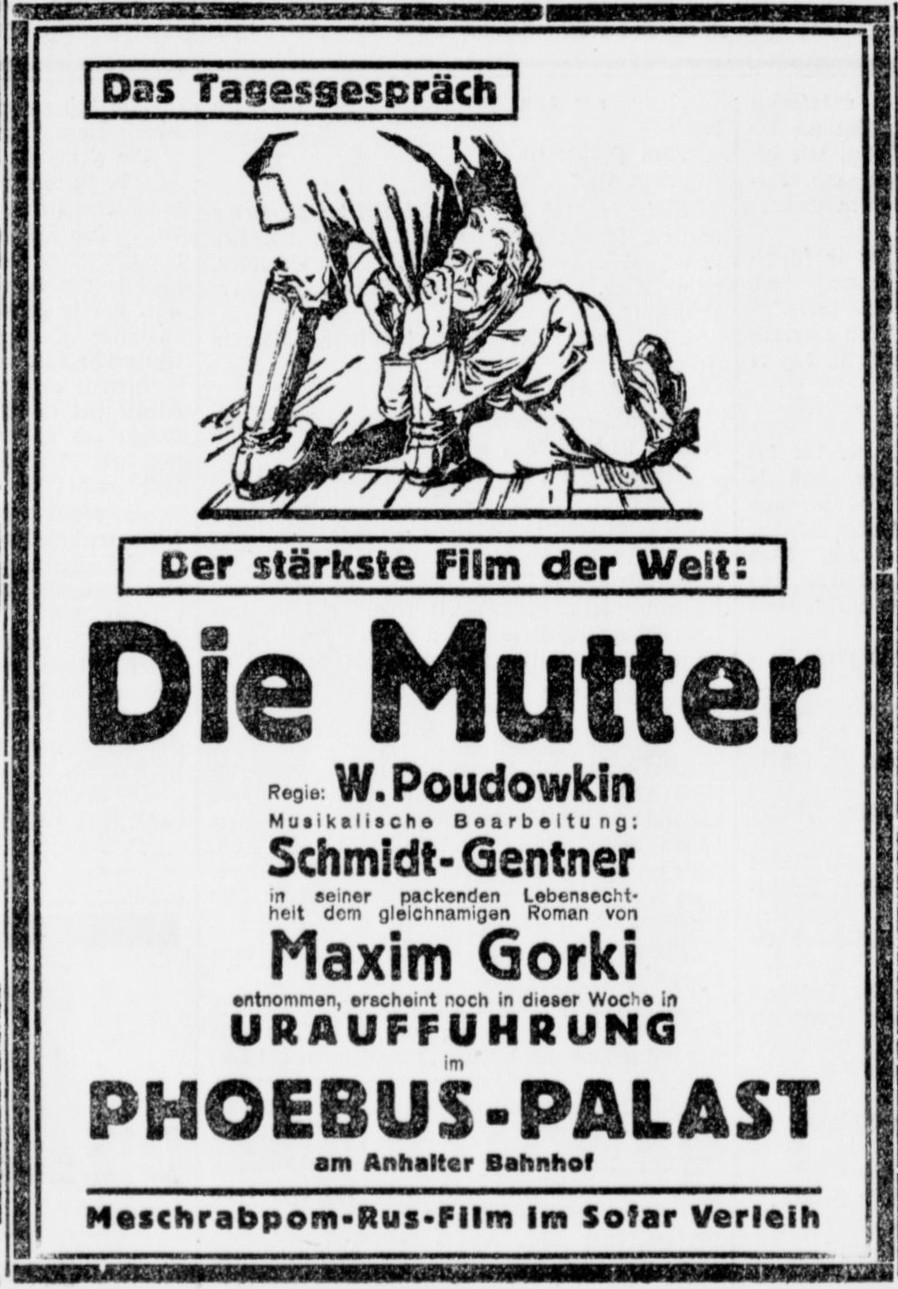
Figure 11. Advert for Mother. Berliner Tageblatt und Handels-Zeitung (22 February 1927).
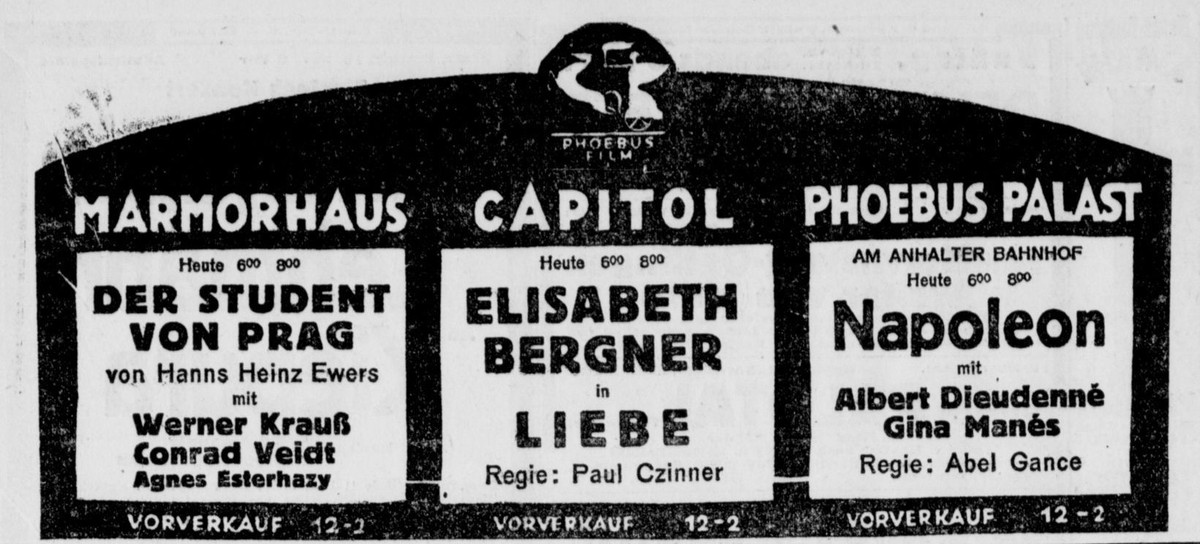
Figure 12. Phoebus cinemas showing rereleased German and French films. Berliner Tageblatt und Handels-Zeitung (16 November 1927).
Though his essay “Zur Filmmusik” had warned in 1924 against the dangers of imported rhythms and styles, across 1925-8 Schmidt-Gentner incorporated great amounts of popular contemporary music, especially songs. His score for Der Veilchenfresser (1926) consisted of numerous “popular melodies” and used as its central motif Osmán Pérez Freire’s “Eilala” (originally, “Ay, ay, ay!” in Spanish). Written in 1913, it had been revived for a Berlin revue in 1926 (Willi Kollo’s “Der Zug nach dem Westen”). The song was initially performed with vocal soloist for screenings at the Marmorhaus, but “this embellishment was abandoned after only the second day.” Since Schmidt-Gentner’s score was of “a remarkable quality,” the melody of “Eilala” was effective (and recognizable) enough in its orchestral guise.89 Similarly, for Wenn die Liebe nicht wär’! (1926), Schmidt-Gentner provided “pleasant, catchy music, successfully incorporating modern popular songs, which contributed significantly to the evening’s success.”90 His scores for Three Ages, The Gold Rush, and His People (1925) are likewise described as being dominated by—and succeeding through—the use of “popular melodies” that appealed to audiences.91 “This was Schmidt-Gentner’s strength from the beginning,” writes Job: “he had a sure sense of public taste. But it could also be his weakness. Among his colleagues, the malicious saying circulated that Schmidt-Gentner knew above all else what housemaids liked.”92
This balance between “high” and “low” was sometimes controversial. For La croisière noire, Schmidt-Gentner’s “peculiar” (eigenartige) accompaniment succeeded with the Berlin public but rattled critics.93 A writer for Der Kinematograph recorded feeling “duped” by his ignorance of “the latest hit songs” cited in the score. While those around him recognized the melodies and—knowing the original lyrics—began laughing, the ignorant critic remained baffled and unmoved. “Unfortunately, this is by no means an isolated case,” he complained, “but rather a well-practiced habit from which even such an excellent musical illustrator as Schmidt-Gentner is not exempt.”94 When La croisière noire was performed in Munich, it caused greater tumult:
[Schmidt-Gentner and his orchestra] revelled in Negro rhythms, Negro monotones, and Negro colour. This was achieved superbly, as was the adaptation to the respective visual character, although occasionally an overly harsh emphasis on the wind instruments and the abrupt use of the theatre’s wind and thunder machines were distracting. During the opening music, part of the audience protested vehemently with boos against the fact that the “Song to the Evening Star” from Tannhäuser was presented as a shimmy. The film itself […] was met with enthusiastic applause.95
Despite Schmidt-Gentner’s strait-laced account of what German film music should be in 1924, here he is playfully (re)arranging Wagner into a modern, exoticized form. The import of American culture (and the bastardization of German music) clearly touched a nerve. Job comments on another occasion that Schmidt-Gentner’s “fans” turned against him when “he dared to perform Gershwin’s Rhapsody in Blue” during a programme: the audience “booed their favourite [conductor], they raged and stamped their feet.”96 (It is a reminder that Berlin audiences, as Hungarian conductor Tibor Alpár warned, were highly discerning and demanding: a cinema could turn into “a madhouse” if the crowd took against its orchestra.97)
Trade publications like Der Kinematograph were also concerned with the wider applicability of film music outside the movie palaces of Berlin. One writer noted that Schmidt-Gentner’s “lighter” scores were “far more valuable” as blueprints for provincial cinemas than scores for “big orchestras.”98 Typical examples were his arrangements of music from Franz Lehár’s eponymous operetta for The Count of Luxemburg (1926) and from “Viennese popular songs” for An der schönen blauen Donau (1926). Here, critics were impressed that Schmidt-Gentner managed to maintain fidelity to the films while avoiding cliché.99 If his contributions occasionally dominated rather than supported the film (his score for Liebe (1926), example, was deemed “far too dramatic”100), he was more frequently complimented on how his music understood films’ tempo, mood, and meaning. Ernst Blass approved of Schmidt-Gentner’s “charming” score for A Dog’s Life (1918) precisely because it “refrains from musical dramatic effects.”101 Likewise eschewing “the grand and profound impact one usually finds in Schmidt-Gentner’s work,” his accompaniment for Die Biene Maja (1926), a documentary on the life of bees, was deemed “exceptionally skilful” for its illustration of delicate flora and fauna.102
Familiarity with the musical content of Schmidt-Gentner’s scores did not exclude their originality. Critics consistently cite his employment of repertory music in ways that were striking and inventive. For The Bat (1926), his score was “remarkable” for its balance between irony and sincerity. “[The music] couldn’t be too original, since this film doesn’t allow it; [instead], Schmidt-Gentner cleverly tried to caricature it, skilfully incorporating sound effects here and there that evoke the heyday of detective films.”103 Exploiting audiences’ familiarity with film and musical genre enabled a complex, participatory form of play. Even in epic productions, individual scenes showcased a musical wit that could delight in unexpected ways. For the scenes of railway construction in The Iron Horse, Schmidt-Gentner employed the “Yankee Doodle” melody, pacing the performance so perfectly that it seemed the workers were swinging their tools in time to the music.104
Phoebus understood the commercial value of Schmidt-Gentner. In adverts, his name stands alongside that of directors and stars, taking second billing to the likes of Chaplin and Fairbanks. In the cinema, Hollywood imports were matched by local artistry. Reviewing The Circus (1928), Franz Wallner praised German musicians over American stars: “The Capitol orchestra was as spirited as it was delicate. That glittering brilliance of the violins, even for the most godforsaken sentimentality!”105 When Sunrise (1927) premiered in Berlin at the Capitol in November 1927, it generated immense critical interest—not least on account of its German director, F.W. Murnau. Yet it was also a popular hit, running thrice daily at the Capitol until mid-December. LichtBildBühne recorded that the audience was “unanimously shaken by the overwhelming impression of the evening,” not least because Schmidt-Gentner provided “a musical interpretation such as has hardly ever been heard in this era.”106 Mixing “his own and others’ musical material,” the score was “worthy of the film” in every way, equally adept at the “dramatic and light-hearted moments.”107 Against Murnau’s visual riches, Schmidt-Gentner’s score was distinguished by its restraint and subtlety. Indeed, one reviewer regretted that this “atmospheric music unfortunately allowed the well-intentioned whispers among the audience to become more audible than desired.”108 The score was successful enough to be performed outside Germany: adverts credit the music at the Bucharest premiere of Sunrise in November 1928 to Schmidt-Gentner.109
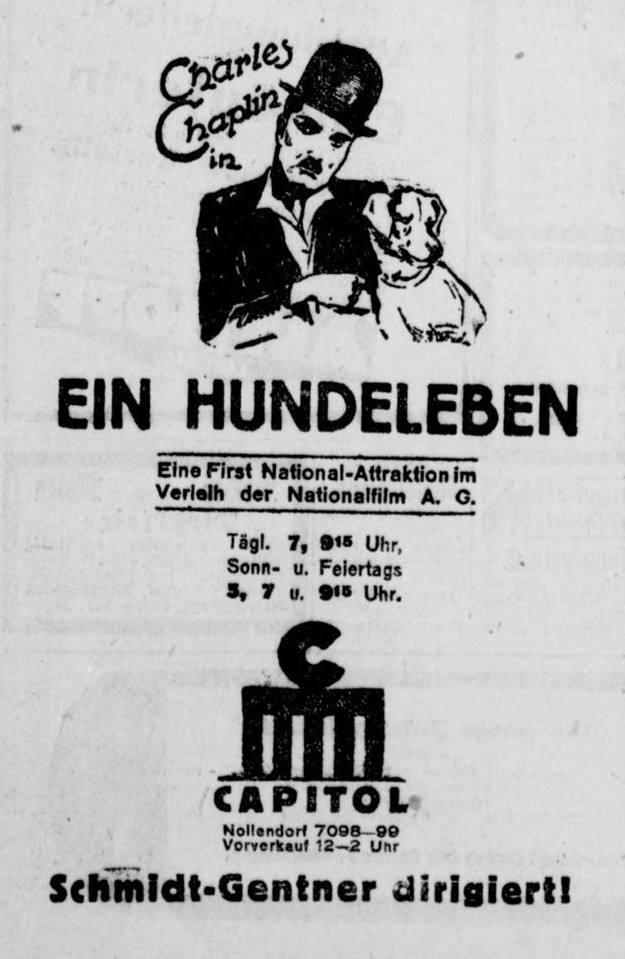
Figure 13. Advert for A Dog’s Life. Berliner Tageblatt und Handels-Zeitung (20 May 1926).
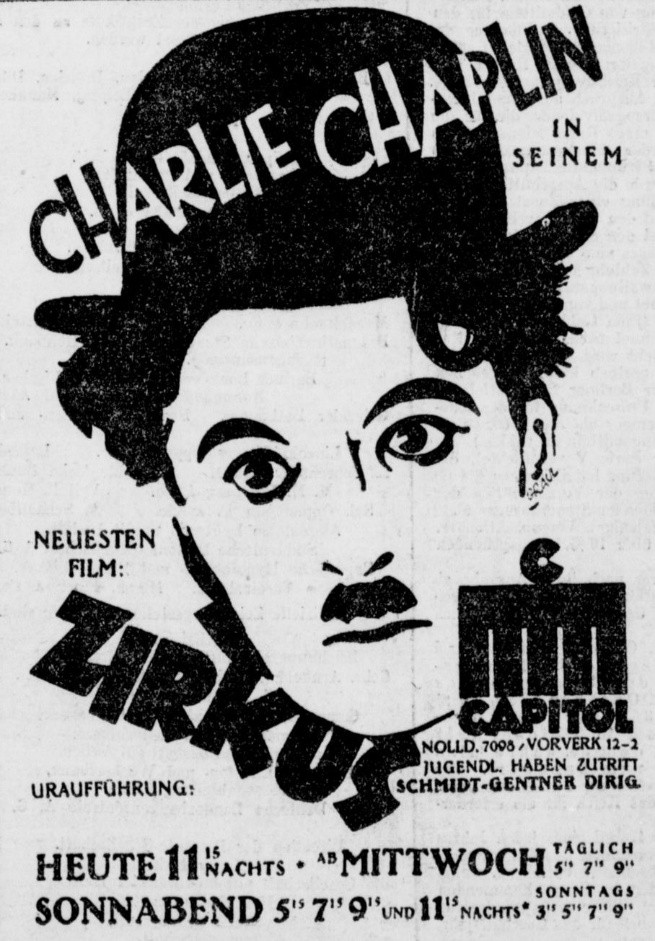
Figure 14. Advert for The Circus. Berliner Tageblatt und Handels-Zeitung (7 February 1928).
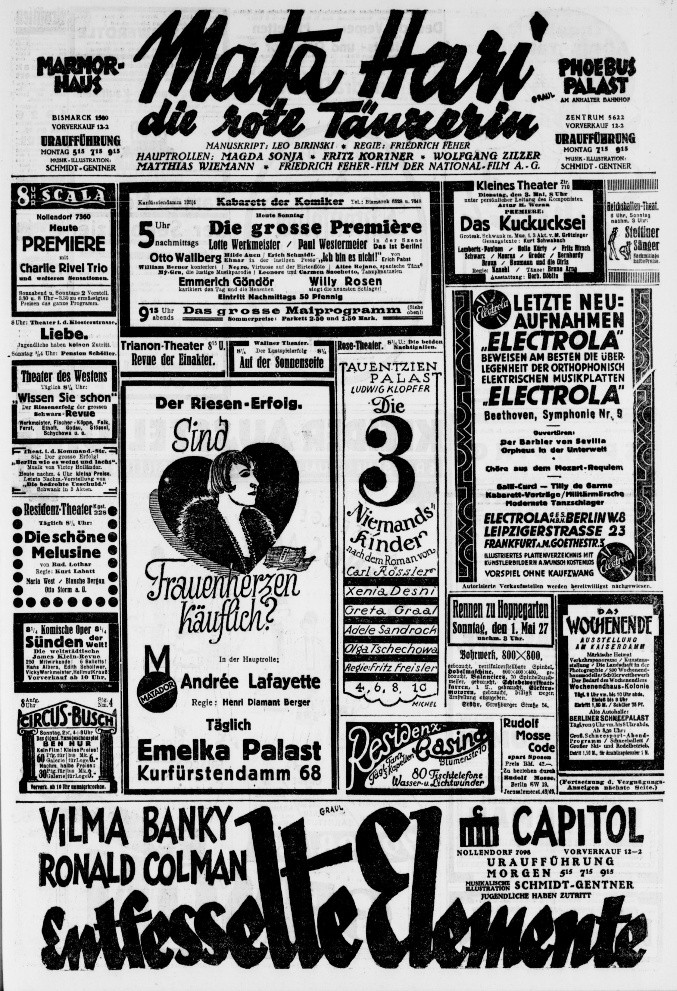
Figure 15. Adverts (at top and bottom of page) for film screenings in three Phoebus cinemas, all featuring Schmidt-Gentner’s music. Berliner Tageblatt und Handels-Zeitung (1 May 1927).
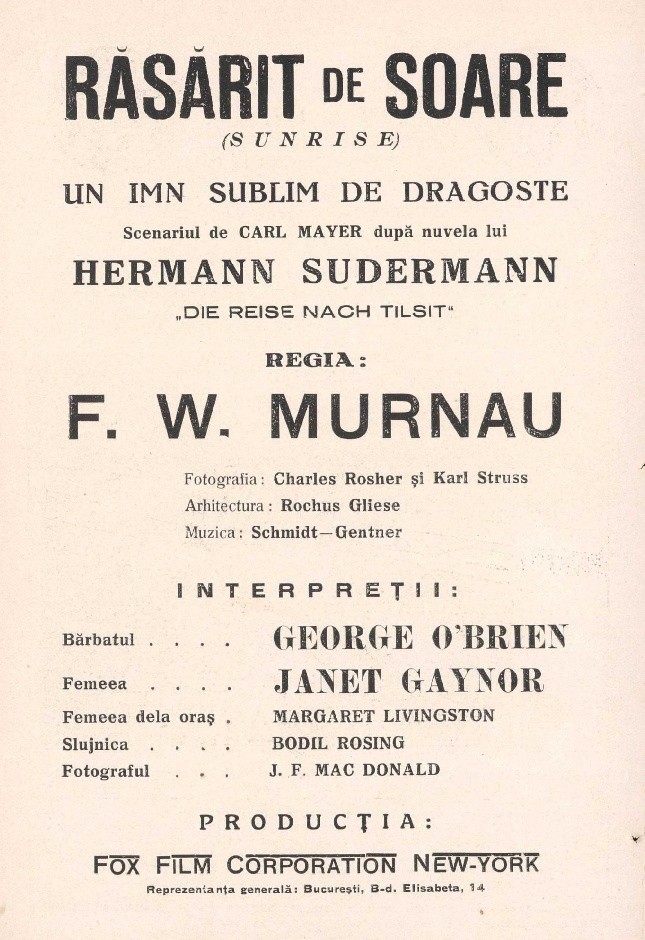
Figure 16. Romanian advert for Sunrise. Cinema (Bucharest) (22 September 1928).
Though Hugo Riesenfeld’s (American) score for Sunrise was not heard in Germany, Schmidt-Gentner conducted at least three film scores by contemporary composers during his time with Phoebus: Der Rosenkavalier (1925) (Richard Strauss), Überflüssige Menschen (1926) (Edmund Meisel), and Der Katzensteg (1927) (Giuseppe Becce). His conducting of Der Rosenkavalier, in the composer’s presence at the Capitol in January 1926, received criticism by those who felt his tempi distorted the music—albeit for the sake of adhering closer to the film.110 The next month, Schmidt-Gentner deliberately included a march from Der Rosenkavalier in his score for Die Mühle von Sanssouci (1926)—a nod to Strauss’s recent visit, and perhaps a challenge to his critics.111 Schmidt-Gentner also stole the limelight from Becce when conducting performances of Der Katzensteg. So “unanimous” was praise for the conductor that “the composer’s name was not mentioned” in any reviews—prompting a polite but firm correction in the press.112
More fraught was Schmidt-Gentner’s editing of music from the traditional repertoire. Ludwig Berger’s film Der Meister von Nürnberg (1927) was based on Wagner’s Die Meistersinger von Nürnberg, and it was assumed accompanying music would be drawn from the opera. Franz Wallner imagined that the responsibility of editing Wagner’s score would have given Schmidt-Gentner “a crisis of conscience”: “A delegation of highly irritated Wagnerians must have appeared to him in a dream and thundered down on the contrite man about profanation and national sanctity.” Wallner admired the way Schmidt-Gentner had found a “compromise system” that was both necessary and “meaningful.” While Wagner’s original leitmotivs were used for characters, Berger’s visual cues (for a Marian hymn, for example) took precedence.113 The result, said the Deutsche Allgemeine Zeitung, was “a rather original hybrid between programme music, Wagnerian opera, and film accompaniment” that “blended in extraordinarily well with the whole.”114 Schmidt-Gentner’s score thus “helped to build bridges” between the film’s cultural heritage and its populist appeal.115 Through the “artistic tact” of his choices, “he managed to avoid offending anyone” while simultaneously producing a “unified” creation.”116
Wallner’s regular music column often cites Schmidt-Gentner, offering a telling blend of praise and criticism. He longed for the musician “to use his talents to their fullest” rather than to be content as “a slick, routine worker.”117 Some films evidenced both traits. Wallner complained that the music for the titular character of Charlott etwas verrückt (1928) “isn’t at all ‘a bit crazy’, not even trying to appear capricious with her waltz and polka numbers.” Yet for a scene involving six dancers searching for lodgings, disguised in “penitential robes,” Wallner admired how Schmidt-Gentner was able “to dress up some cheeky pop song in a pious choral rhythm.”118 For performances of Konets Sankt-Peterburga, Wallner observed that Schmidt-Gentner’s use of Tchaikovsky produced a “a bourgeois, romantic illustration” that seemed to dress the “workers and soldiers [in] velvet jackets”; this was surely not what the Soviet director Pudovkin intended.119 (By contrast, Manfred Georg praised this same score, “which swirled fierily and swiftly around the images.”120)
Cultural sensitivity in sound was also an issue with Im Lande des silbernen Löwen (1927), a documentary exploring Iran. Schmidt-Gentner employed “Asiatic music made in Germany, which is pressed into the straitjacket of European harmony.” This “quasi-Oriental” score managed to remain “incidental” rather than “intrusive,” illustrating landscapes and climate with sympathy and imagination.121 Wallner was more impressed by Casanovas Erbe (1928), in which Schmidt-Gentner followed the film’s swift “visual stenography” in one sequence with his own rapid montage of “nimble” cues, each “only a few seconds long.” Yet he also understood the relationship of this scene to the narrative arc, “vividly painting a picture of anxious anticipation” by suspending a single high woodwind note “over the changing musical scenery.” If Chopin’s Polonaise in A major (Op. 40, No. 1) was a familiar piece in numerous film scores of the period, Schmidt-Gentner “integrated [it so seamlessly] into the narrative” that its structure, tone, and tempo seemed both to emerge from and to propel the film. It was as if music and image belonged together “by natural accord.”122
The only primary evidence of Schmidt-Gentner’s music in this period is his score for Die Weber (1927), the survival of which is recorded here for the first time.123 Directed by Friedrich Zelnik, this historical drama (based on Gerhart Hauptmann’s eponymous play) was a Phoebus production that premiered at the Capitol in May 1927. Schmidt-Gentner’s programme consists of 50 musical cues (averaging less than two minutes each) from 25 composers. This includes eight composers from the classical/operatic repertory (Beethoven, Brahms, Gustave Charpentier, Cherubini, Leoncavallo, Marschner, Puccini, Tchaikovsky) and 17 from contemporary composers of light, popular, and/or film music (William Axt, Maurice Baron, Giuseppe Becce, Irénée Berge, Francis Casadesus, Félix Fourdrain, Adolphe Gauwin, Hans Erdmann, Fritz Hannemann, Otto Langey, T.R. Leuschner, Jean Gabriel-Marie, Erno Rapée, Jaques Renée, Hugo Riesenfeld, Domenico Savino, Kate Vannah).
While the document contains score/publication details to indicate the source of each piece, six cues are labelled simply “Weberlied.” The sidenote “Einlage” indicates that this piece was not to be found in the cinema’s library but would be provided separately. “Weberlied” was in fact an original composition by Schmidt-Gentner, based on the rhythm of the song as performed (but never notated) on screen. Cited in reviews as the central motif of “Schmidt-Gentner’s haunting, resonant accompaniment,”124 critics felt that this piece seemed to “grip” the film by force.125 Lucius Schierling hoped in vain that the “fast, driving rhythm” of the song would encourage his fellow spectators to clench their fists and “stamp along” to the music.126 (Alas, he observed, the Berlin audience was too bourgeois.) Schmidt-Gentner made his music “the servant of the idea,” a rhythmic force “to drive the passion of the impulses.” Critics admired not only “the gripping, fascinating weavers’ song,” but “the little episodes where he picks up the hesitant, hammering rhythms of George Grosz’s giant lettering” of the intertitles on screen.127 It was not merely the “Weberlied” that “captured the drama’s wild rhythm,” but the whole score.128
While much of the action is dominated by standard film music (Axt, Becce, Rapée et al.), key moments are defined through classical/operatic choices. The opening title music—from Beethoven’s Egmont overture—suggests revolutionary struggle, just as the closing cues—from Puccini’s Le Villi and Leoncavallo’s Zazà—suggest personal sacrifice and defiance. There are also striking shifts between different musical genres that surely emphasized the tensions in the drama. For example, as the film shifts from the rich landowner’s banquet to the weavers’ growing fury, Schmidt-Gentner moves from Baron’s sentimental ditty “Queen of my Heart” to Cherubini’s doom-laden overture to Medée. Such touches are evident from a cue sheet, but many more effects would only be evident in the (notated) scores prepared for screenings. Per Schmidt-Gentner’s earlier account of his method, numerous details would be refined across multiple rehearsals and performances. The realization in sound of this music can only be sensed through contemporary reviews, which suggest the tremendous impact of experiencing Die Weber at the Capitol. As Karlernst Knatz wrote, Schmidt-Gentner’s creation “stands out greatly from the mass of film music.”129
A century later, it is remarkable to consider both the quality and the quantity of orchestral accompaniment at cinemas in Berlin. In 1928, Franz Wallner admitted that “around the Gedächtniskirche, we are rather spoiled” for film music.130 Among these venues, Wallner argued that the Capitol “indisputably possesses the best of all film orchestras,” thanks to the management’s “special understanding of the importance of the musical question”—and their employment of Schmidt-Gentner.131 A sketch in Mein Film has a producer ask a critic for his opinion of their latest production. The critic pauses for a moment, then replies, “My god, if you closed your eyes and listened to Schmidt-Gentner’s music, it was quite lovely!”132 The sketch echoes numerous reviews that praised his “felicitous” scores for “allowing the viewer to glide over any shortcomings” in the film itself.133 For Berend Pál, “Schmidt-Gentner was created by God to be a musical film illustrator.” His “routine work”—assembling tiny fragments of music from a huge library of scores—appeared to Berend like a form of “witchcraft.” This intuitive process did not rely on the calculated guidelines favoured by Giuseppe Becce, whose multi-volume Kinothek (1919-33) listed musical cues for thousands of different situations on screen. Becce’s “breaking down [of] the human soul into its constituent parts” made him “the Sigmund Freud of music,” wrote Berend. While Becce “is the theoretical dissector of ‘film illustration’, Schmidt-Gentner is its God-given practitioner.”134
In more earthly terms, he was a crucial element in the marketing and exhibition of new films. Within and beyond Berlin, observed Hans Erdmann, he “reigns supreme”: “Schmidt-Gentner doesn’t hold the title of General Music Director, but he is, in effect, the first German General Music Director of film: the film music mogul.”135 From his modest beginnings, in a few years he had become a leading figure of German film culture—and evidently enjoyed the rewards of his success. Job offers a delightful image of Schmidt-Gentner at this time, slurping his “hot chicken broth with noodles” while “gold cufflinks with diamonds sparkled on his sleeves.”136 But his star status at Phoebus masked the financial crisis gripping his employers. Implicated in a huge political scandal (the “Lohmann Affair”) involving secret government payments, Phoebus went bankrupt and sold all its theatres to Emelka. This crisis was also an opportunity for Schmidt-Gentner, who jumped ship to Germany’s largest film company: Ufa.
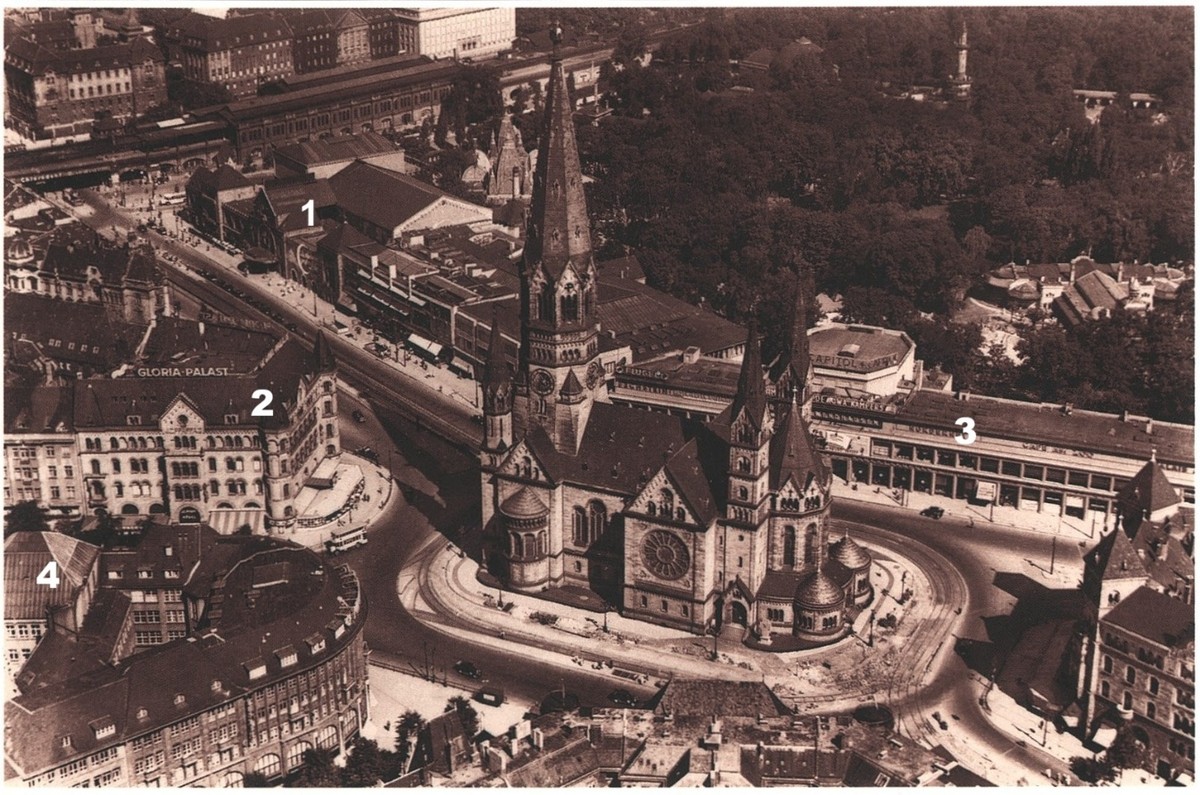
Figure 17. Cinemas near the Gedächtniskirche: the Ufa-Palast am Zoo (1), Gloria Palast (2), Capitol (3), and Marmorhaus (4). Author’s collection.
Generalissimo of Ufa music: 1928-1929
After its takeover by right-wing press baron Alfred Hugenberg in 1927, Ufa modelled its business strategy on that of Hollywood, whose international success it hoped to rival. Under the executive management of Ludwig Klitzsch, every aspect of film production, distribution, and exhibition was tightly controlled. Ufa’s ruthless streamlining led to numerous layoffs and legal disputes among its musical personnel during 1927-9. Important figures in the development of film music like Giuseppe Becce, Werner Heymann, Ernö Rapée, and Marc Roland had acted as composers and conductors for Ufa across the decade, but all had departed by 1929. Rapée’s tenure ended when he returned to America in 1926; Becce resigned after Ufa declined to increase his salary in 1928; Heymann quit in protest at Hugenberg’s politics in 1928; Roland left after artistic disagreements in 1929. There were further dismissals of longtime conductors and musicians that Ufa regarded as troublesome or underperforming.137
It was into this fraught context that Schmidt-Gentner arrived. Anticipating the departure of Becce in June 1928, Ufa’s board of directors sought to engage Schmidt-Gentner for a monthly fee of 4500RM (5300RM “including an assistant”) to act as musical illustrator for screenings at the Ufa-Palast am Zoo and the Gloria-Palast—as well as “providing valuable assistance with all our musical matters.”138 As negotiations continued, it became clear that Schmidt-Gentner still owed 18,000RM to Phoebus, “arising from advance payments,” which would have to be settled beforehand—or else paid by Ufa and deducted from his salary. The new contract was to be for one year with the option for Ufa to extend it for another, pending future negotiations.139 Schmidt-Gentner officially “assumed the musical direction of Ufa theatres” on 1 August 1928.140
Franz Wallner observed that Schmidt-Gentner’s appointment as “Generalissimo of Ufa music” gave him “extensive powers” but feared the consequences of “burdening a single individual with the responsibility for all major premieres.”141 Despite this note of warning, Schmidt-Gentner may have felt a sense of security—and prestige—in other new appointments at this time. Schmidt-Boelcke took over as music director at the Capitol and Mamorhaus, extending the influence (as Der Kinematograph put it) of “the Schmidt-Gentner school” in Berlin.142 Hanns Brodnitz meanwhile moved to Ufa, where he hoped to “develop the individual character” of the company’s cinemas through the techniques he had honed alongside Schmidt-Gentner.143 The “Generalissimo” and his former colleagues were now installed as the leading figures across Berlin’s most prestigious film venues. As if to symbolize his new position, it was at this juncture that he gained legal approval for his name change from Schmidt to Schmidt-Gentner.144
Yet again, he did not have far to move. The Ufa-Palast am Zoo (2100 seats) was just along the road from the Capitol, while the Gloria-Palast (1200 seats) was opposite it. Schmidt-Gentner would also conduct at other major Ufa cinemas in Berlin: the Ufa-Pavillon am Nollendorfplatz (850 seats), located opposite the Mozartsaal; the Universum-Theater Kurfürstendamm (1700 seats), half a kilometre west of the Alhambra; the Kammerlichtspiele im Haus Vaterland (1400 seats), part of a leisure and entertainment complex on Potsdamer Platz. Alongside Schmidt-Gentner and his assistant Hans Julius Salter, Ufa retained Artur Guttmann, Otto Steenzel, and Walter Winnig to direct music for these venues.
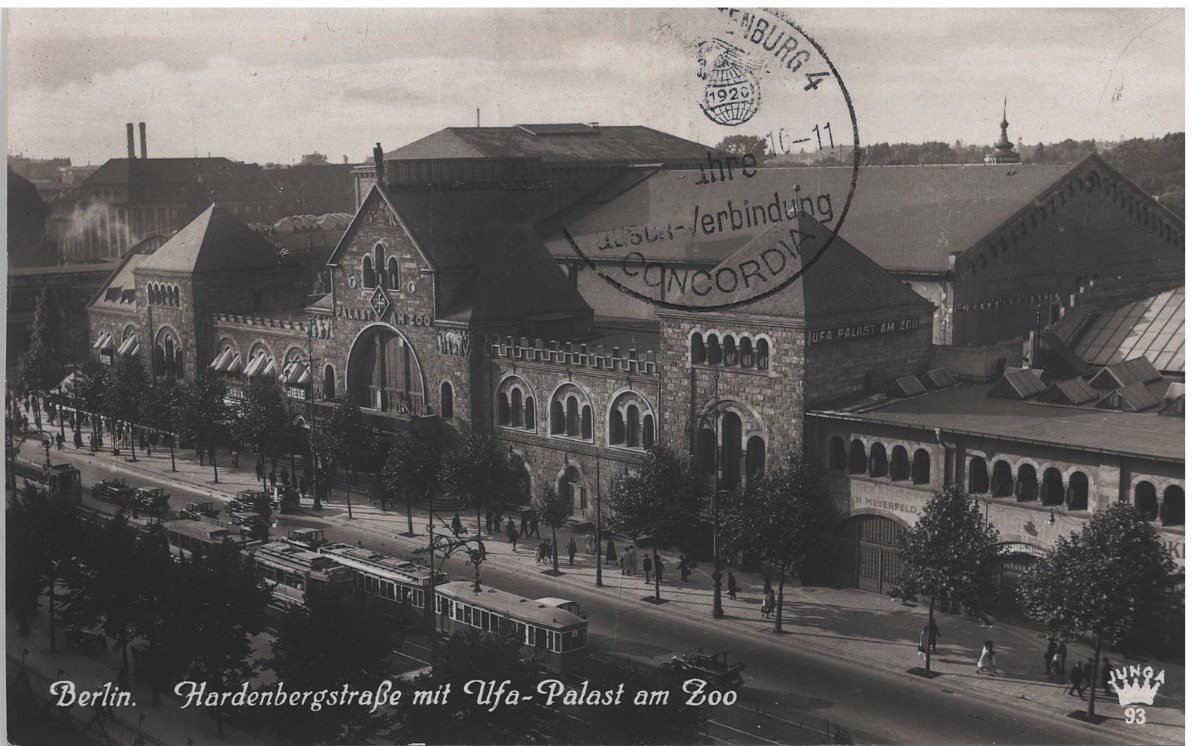
Figure 18. The Ufa-Palast am Zoo. Author’s collection.
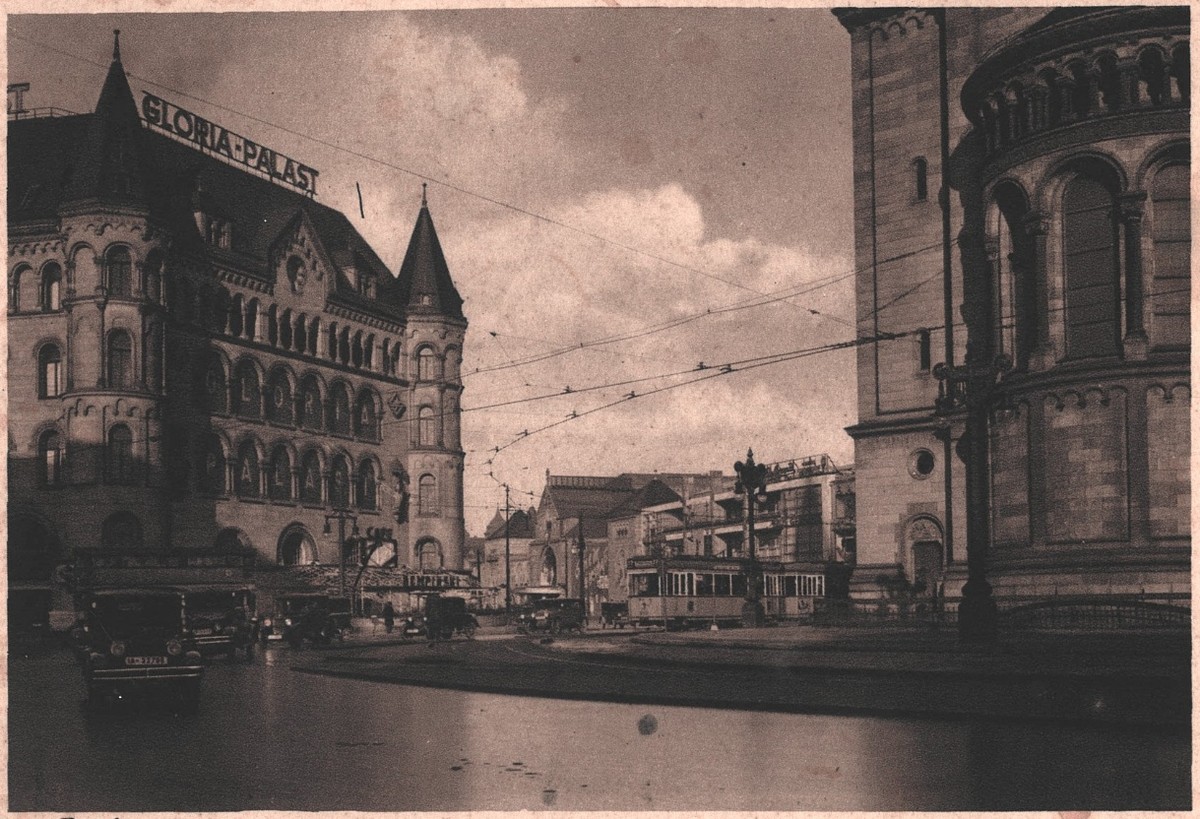
Figure 19. The Gloria-Palast. Author’s collection.
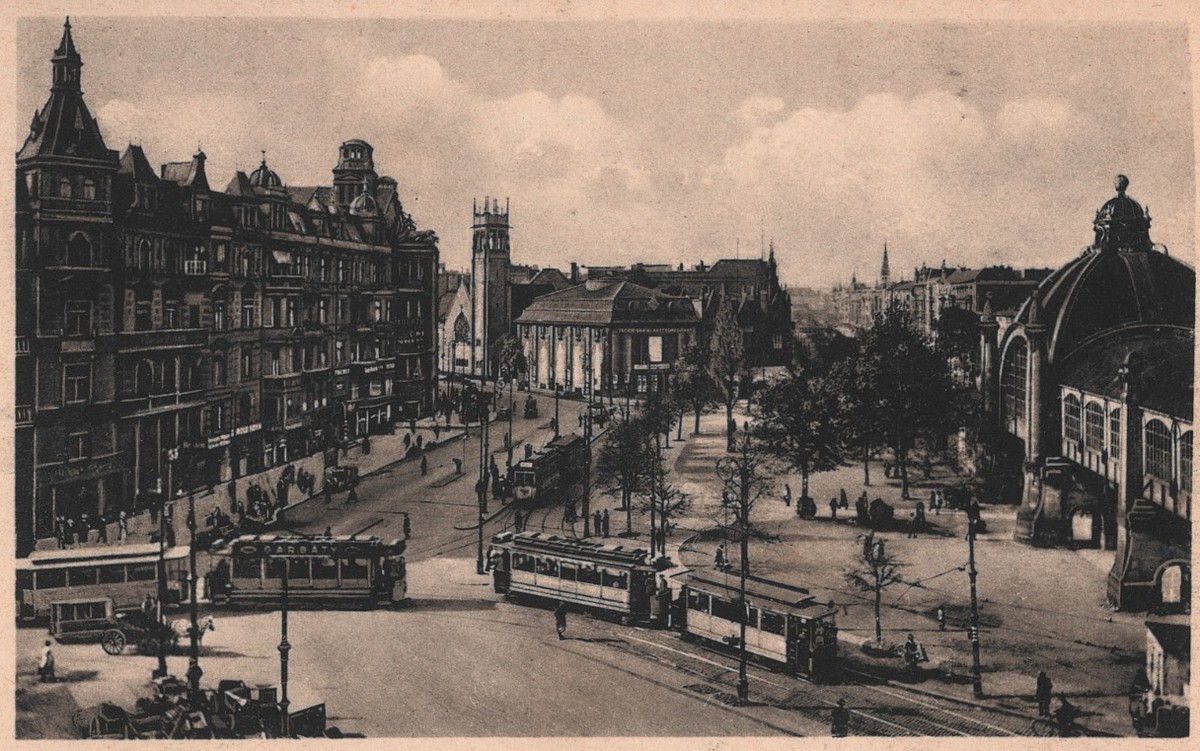
Figure 20. The Ufa-Pavillon am Nollendorfplatz (rear, middle). Author’s collection.
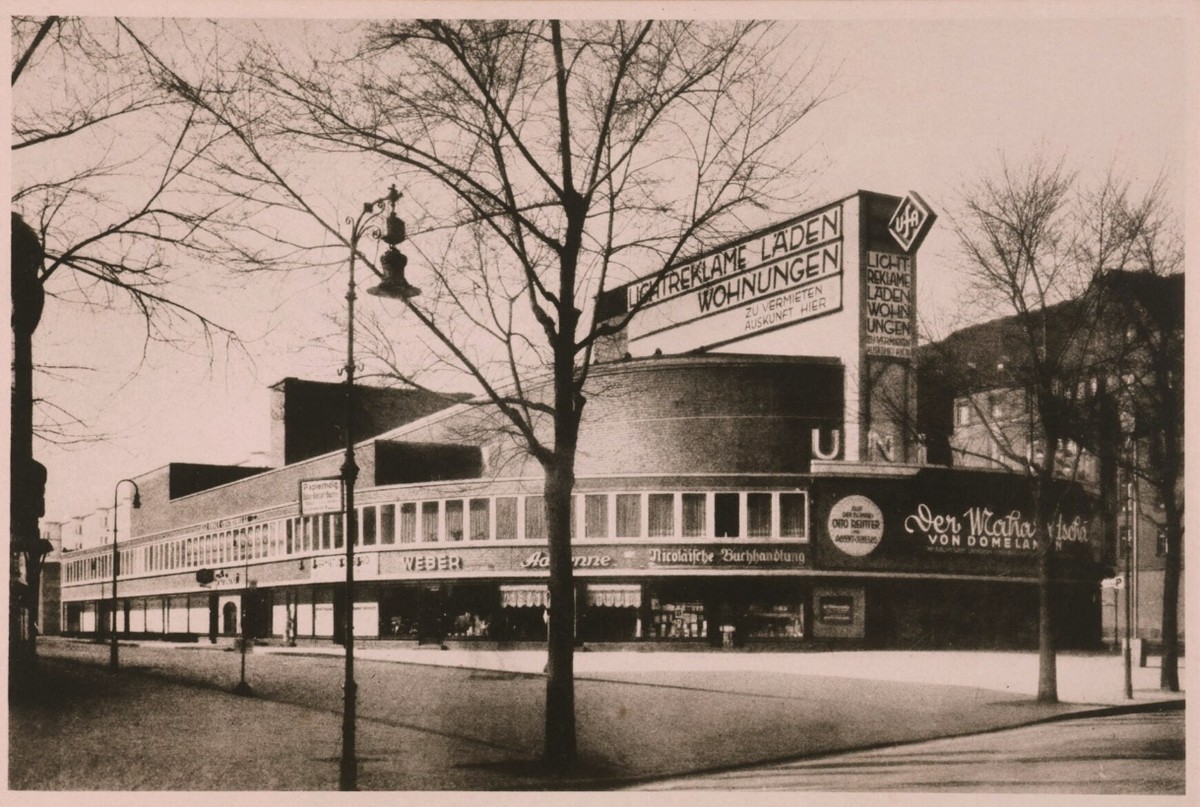
Figure 21. The Universum-Theater Kurfürstendamm. Author’s collection.
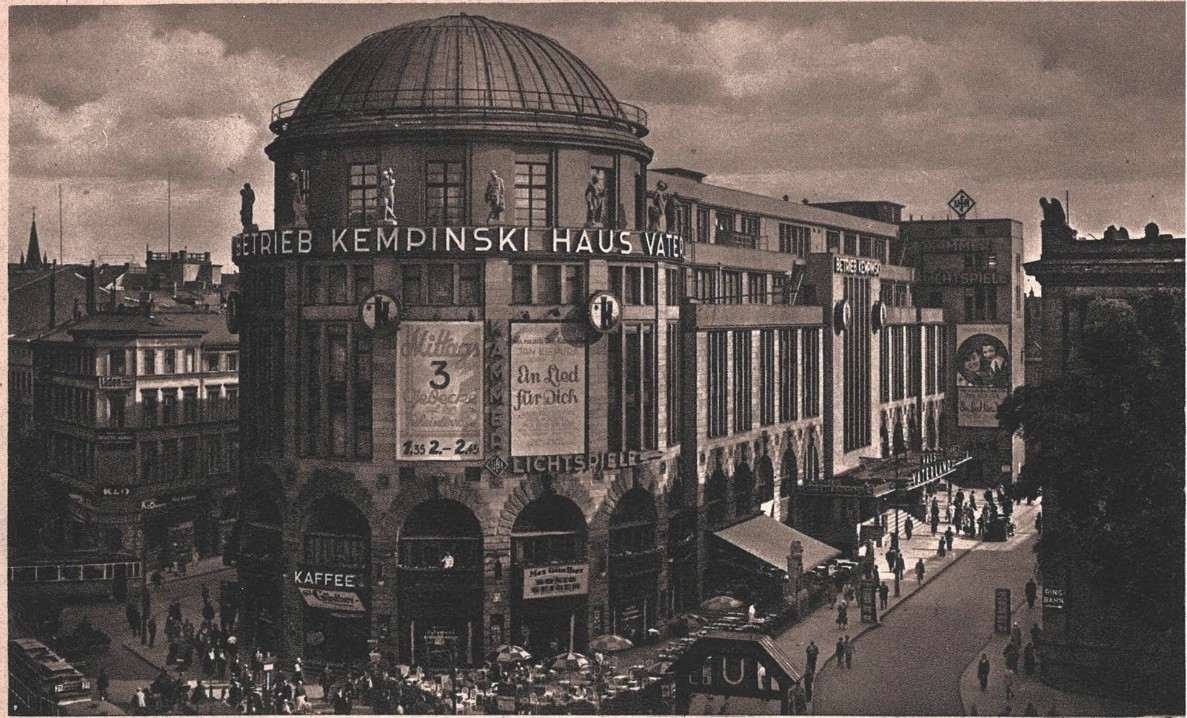
Figure 22. The Kammerlichtspiele im Haus Vaterland. Author’s collection.
During the interim summer of 1928, Schmidt-Gentner conducted at a film festival in Munich. This collaboration between local tourism and music organizations was also in association with Ufa. Ufa’s prospective “Generalissimo” conducted alongside former employees Heymann and Rapée. Together with Hermann Ludwig and Fritz Steinmann, they provided music for German, Russian, and American films; Schmidt-Gentner’s contributions included The General (1927) and Konets Sankt-Peterburga.145
Schmidt-Gentner’s new season in Berlin then began with the German premieres of imported films: The Battles of Coronel and Falkland Islands (1927), Moulin Rouge (1928), Steamboat Bill Jr. (1928), The Student Prince in Old Heidelberg (1927), The Last Command (1928), The Jazz Singer (1927). Notable in the writing and reception of music for these films is the cultural tensions they embodied in 1928, from the depiction of wartime defeat, the return of émigré talent, to the foretaste of American sound.
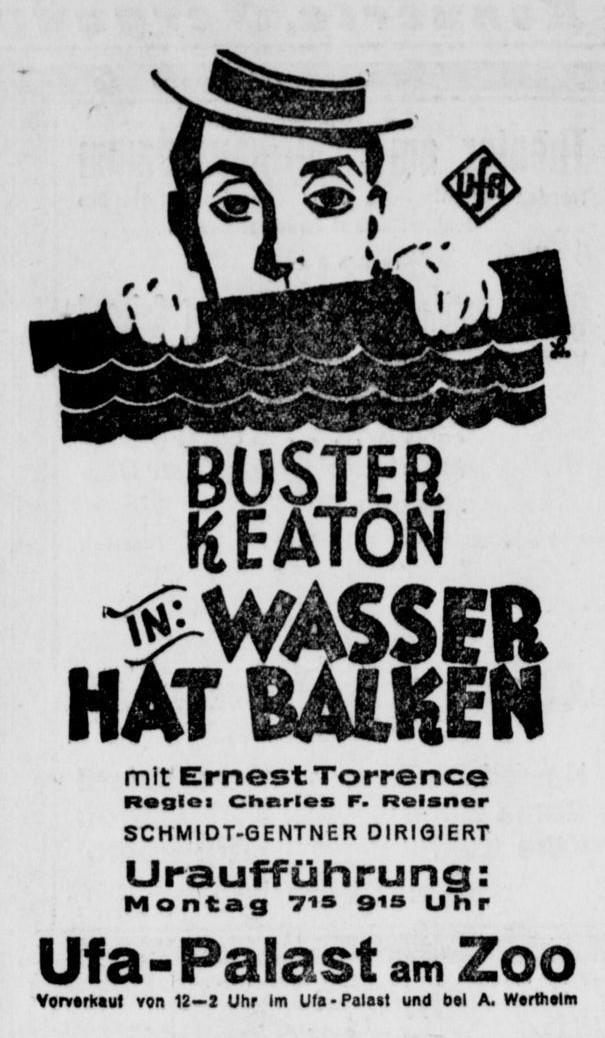
Figure 23. Advert for Steamboat Bill Jr. Berliner Tageblatt und Handels-Zeitung (2 September 1928).
Despite the anti-German message of The Battles of Coronel and Falkland Islands, for example, Schmidt-Gentner’s score managed to eschew “jingoistic patriotism.”146 If the images were imbued with nationalism and nostalgia, the soundscape was international—and modern. Wallner identified the experimental influence of Marc Roland and Edmund Meisel—presumably their music for, respectively, Der Weltkrieg (1927-8) and Bronenossez Potjomkin (Battleship Potemkin, 1925). Further, Schmidt-Gentner used Honegger’s Pacific 231 to accompany images of the “pounding monotony” of warship pistons. “The spray on the wave-ploughing bow, in close-up, finds its acoustic counterpart in the rushing reverberation of the gong; one almost hears the water surging up.”147 While Wallner admired the boldness of such choices, Der Kinematograph viewed this score primarily from the perspective of its potential as a “model” for provincial cinemas. It criticized the very scene that impressed Wallner as an example of the “hypermodern rhythms” with which lesser orchestras would struggle.148
A more playful blend was assembled for The Private Life of Helen of Troy (1927), a Hollywood production set in the ancient world but exploring modern mores. Ernst Jäger delighted in the “parodic boldness” of its conception and execution, stepping away from the “decorative bombast” of Ben-Hur (1925) towards a “dance-like cinema.”149 Schmidt-Gentner’s score captured precisely this sense. A medley of old and new operetta melodies, its principal motifs were drawn from Offenbach: both music and film consciously redressing familiar material.150
More complex was the context of La Passion de Jeanne d’Arc (1928), a French production made with an international cast and crew. Its treatment of history was an excuse for the Süddeutsche Zeitung to assert that the French “have not changed since 1430,” citing “the same sadists in the Ruhr region in 1923” torturing German prisoners. If Carl-Theodor Dreyer’s film was so moving, it was only because the history of Joan had been cleaned of the “filth” of its French culture by a Danish director.151 Part of this “cleansing” was also musical. The Süddeutsche Zeitung credits Schmidt-Gentner’s score for raising the presentation to a higher level. The programme at the Gloria-Palast began with a Handel organ concerto, followed by Schubert’s choral piece “Gott ist mein Hirt” (Psalm 23); after the film, “Heilig, heilig, heilig” (from Schubert’s Deutsche Messe) offered a reflective postlude.152 As so often, the contents of the film score itself are not detailed, but reviews praise the “exceptionally skilful and subtle [music], entirely subservient to the overall effect. The impression was powerful.”153 Der Kinematograph congratulated Schmidt-Gentner for having “solved” the musical “problem” of accompanying so difficult a film.154 Even the socialist paper Vorwärts admitted the spiritual aura of the experience: “The film’s exquisite music […] gave it its consecration.”155
Across the winter of 1928-9, Schmidt-Gentner created music for four major Ufa films: Heimkehr (1928), Ungarische Rhapsodie (1928), Asphalt (1929), and Die wunderbare Lüge der Nina Petrowna (1929). Producer Erich Pommer intended them to unite technical prowess with commercial appeal. These big-budget productions were given lavish premieres, including scores by Ufa’s musical director. The two films directed by Hanns Schwarz—Ungarische Rhapsodie and Nina Petrowna—also mark an important new direction in Schmidt-Gentner’s creative involvement. A truly successful “musicality” in film, Schwarz wrote, demanded “collective work” from the creative team.156 As such, both Ungarische Rhapsodie and Nina Petrowna were to be “sonorous silent films”—experiments in how music and image could be shaped together.157
The design of Ungarische Rhapsodie “was entirely focused on inner music,” Schwarz explained. Not only were sequences written to showcase music on screen, but “there was a piano in the editing room, and that’s where the illustration was created. The editing itself was based entirely on musical considerations.”158 Much of Schmidt-Gentner’s score drew from Hungarian music, but he also composed original pieces for the film. His “Ungarisches Erntelied” accompanied the opening harvest scene, while the “Lied vom Honvédhusar” was used in a tavern sequence. Here, Schwarz wrote, “the footage is precisely calibrated to the centimetre […] so that no rhythmic discrepancies can arise between the film and the accompanying music.” In this way, the director claimed Ungarische Rhapsodie to be “the first silent film that was constructed musically from beginning to end; in other words, to be a ‘sound-film-like’ silent film.”159
Schmidt-Gentner’s score was used as a selling-point for Ungarische Rhapsodie; both the “Ungarisches Erntelied” and “Lied vom Honvédhusar” featured in advertising (see figures 24 and 25). For the premiere at the Ufa-Palast am Zoo, Schmidt-Gentner’s regular orchestra was augmented from 34 to 60 musicians, together with a 30-strong choir and a 14-man “gypsy band.” (Ufa budgeted these extra forces at 500RM per evening and arranged that they were to be “gradually reduced” after the first few days of exhibition.160) The “gypsies” were in fact a professional Hungarian ensemble led by Arpad Szegledy.161 Among their number were players from the regular chamber group of cimbalom virtuoso Josef Krepela. As the press reported, Krepela and his band were the very musicians who feature in the film.162 The first screenings at the Ufa-Palast thus featured the remarkable spectacle of these players synchronizing to their filmed performances on screen.
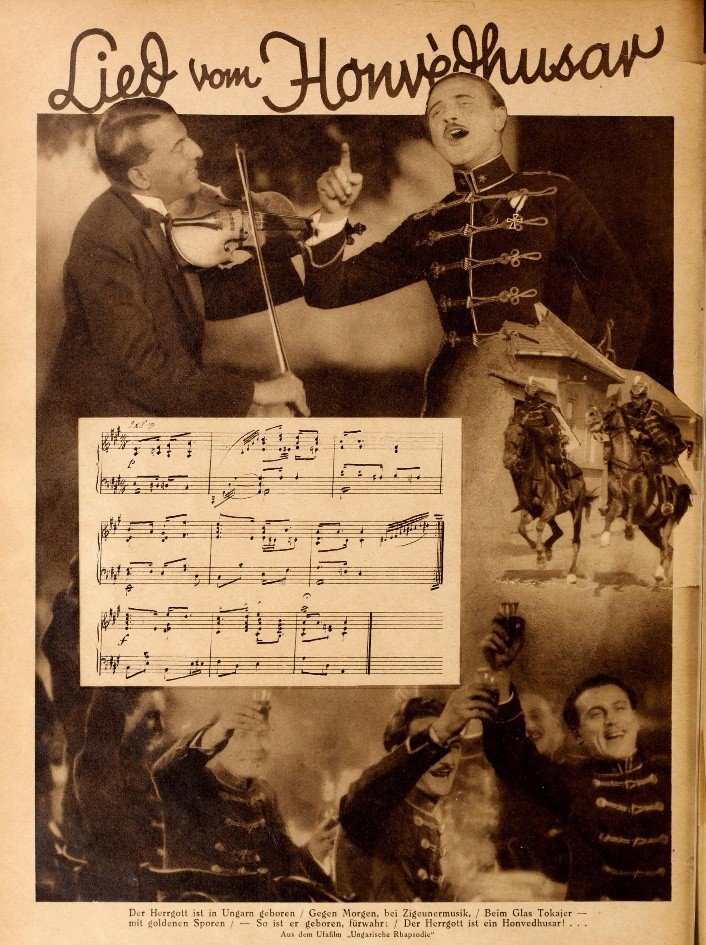
Figure 24. Advert for Ungarische Rhapsodie. Film Magazin (20 January 1929).
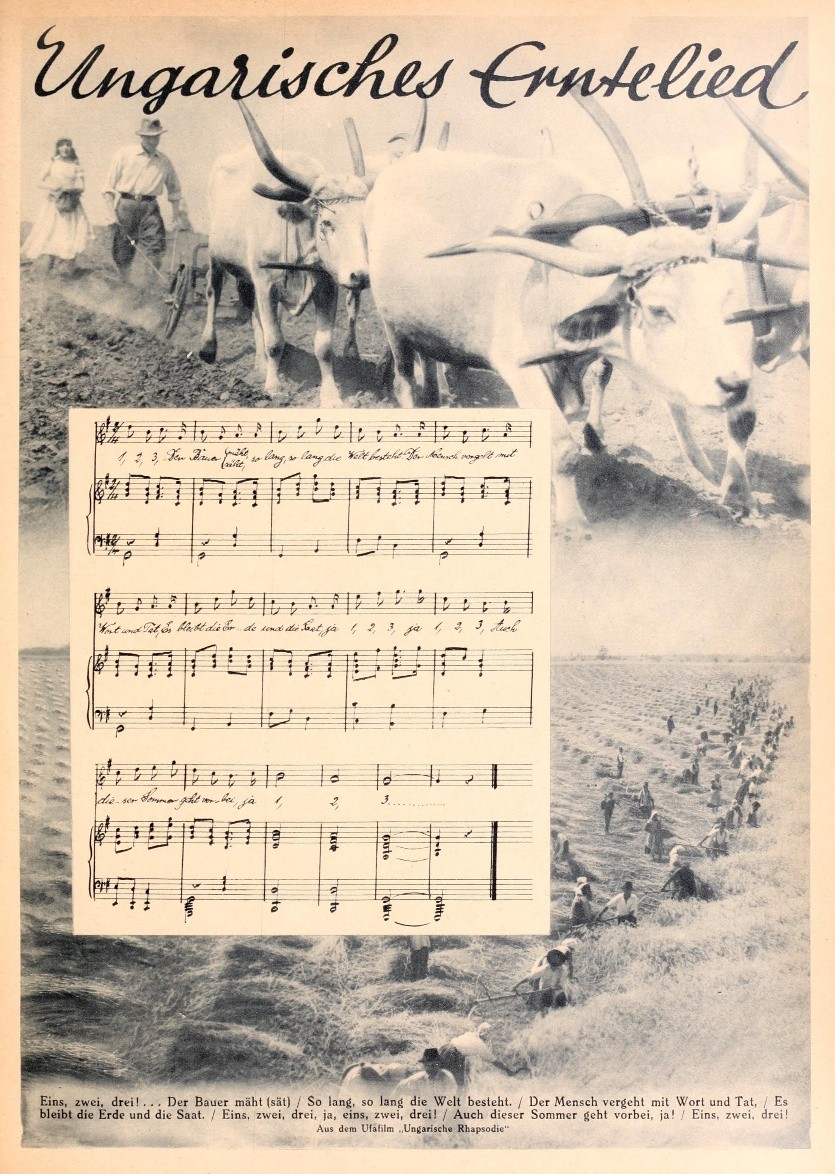
Figure 25. Advert for Ungarische Rhapsodie. Film Magazin (27 January 1929).
It was not just the virtuoso sequences of music-making on screen that attracted praise. From the overture before the film—Liszt’s Hungarian Rhapsody No. 2—to the closing scenes, the audience at the Ufa-Palast am Zoo broke into frequent applause. Each visual sequence unfolded like a musical number, the fluid camerawork and rhythmic editing precisely co-ordinated on screen and in the orchestra.163 K. Glück admired the “bravura” with which Schmidt-Gentner controlled “this musically extraordinarily demanding film,” and eagerly joined the loud ovations.164 For visiting Hungarian journalists, the choral rendition of the Szózat (a national hymn) during the harvest festival sequence was especially moving.165 For all attendees, the “fabulous accompanying music” made Ungarische Rhapsodie “one of the most glorious achievements” of recent film.166 Even the usually clear-headed Fritz Olimsky gushed over his experience in the cinema. This was “a work whose splendour makes your heart beat faster for two hours. The melodiousness of it all! Truly, this is a Hungarian rhapsody.” Its perfect symbiosis of audiovisual feeling and form made Ungarische Rhapsodie a “unique” creation.167
After the Berlin premiere on 5 November, the film opened in Budapest in three cinemas simultaneously on 8 November. The Forum, Palace, and Ufa theatres each engaged its own gypsy band to accompany the film, so Schmidt-Gentner did not accompany Pommer, Schwarz, and screenwriter Hans Székely to Budapest.168 Instead, he travelled to direct the film’s opening at the Lessing-Theater in Hamburg (see figure 26). “The musical score is the essential element of this film,” the local press explained. The cinema therefore “has increased its orchestra to 30 musicians and, moreover, has secured no less a conductor than Kapellmeister Schmidt-Gentner.”169 The week of performances in Hamburg made as great an impression as in Berlin. Critics once more admired the “meltingly beautiful Hungarian music,” noting that the augmented orchestra allowed for a greater range of sound “than the usual ensemble” heard at the cinema.170
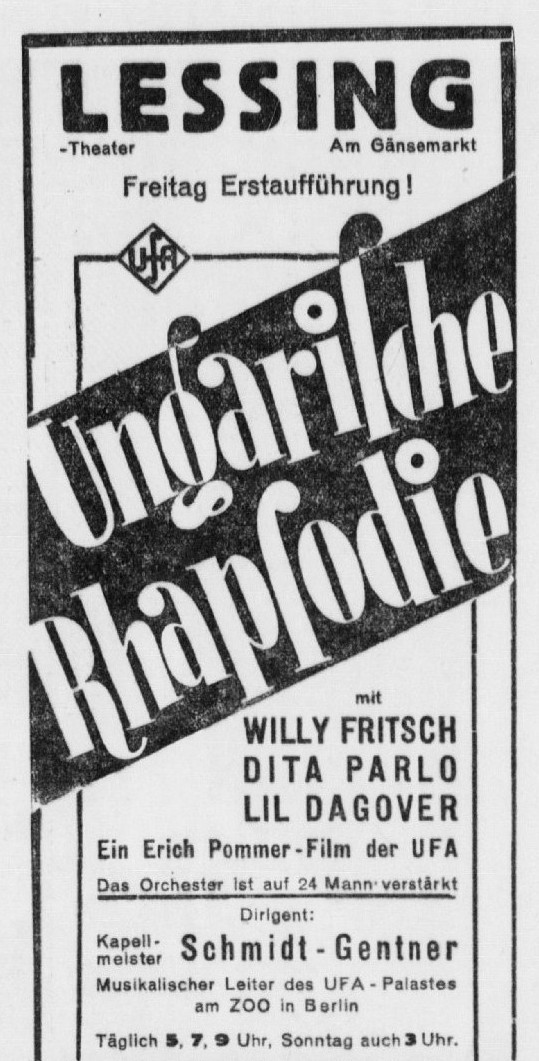
Figure 26. Advert for Ungarische Rhapsodie. Hamburgischer Correspondent und Hamburgische Börsen-Halle (16 November 1928).
If Schmidt-Gentner’s score was not performed beyond Berlin and Hamburg, there was at least one effort to replicate its form. Under the title Ungersk Rapsodi, the film’s Swedish premiere took place in Stockholm at the Röda Kvarn. This was Svensk Filmindustrie’s most prestigious venue, where music director Rudolf Sahlberg had become a major figure in Swedish film culture.171 Sahlberg made “a study trip to Berlin” to observe Schmidt-Gentner’s presentation of Ungarische Rhapsodie in late 1928.172 On his return to Stockholm, Sahlberg assembled a music programme that was then printed for re-use elsewhere in Sweden.173
Inspired by, if not based on, the music he heard at the Ufa-Palast, Sahlberg’s programme is the nearest evidence to the score by Schmidt-Gentner. It consists of two overtures and 59 cues (averaging around 90 seconds each) from 38 named composers. (Included in the 59 cues are one to be “improvised” by English horn and two for unspecified Hungarian “national” melodies.) Sahlberg’s selection features work by seven composers cited in Schmidt-Gentner’s score for Die Weber (Axt, Baron, Becce, Brahms, Gauwin, Rapée, Savino), including one identical piece (Gauwin’s “Geister der Lüfte”). There is also a citation of Strauss’s Don Juan, which featured in other scores by Schmidt-Gentner (discussed below). As well as employing Liszt’s Hungarian Rhapsody No. 2 for the overture to the first act, Sahlberg replicates Schmidt-Gentner’s use of the “Rákóczi March” for the hussars’ parade (as described in German reviews).174 The use of the “Szózat” may also be implied in the “national” song that Sahlberg uses for the harvest ceremony, per Schmidt-Gentner. Among the pieces used by Sahlberg, only one is Swedish (Yngve Sköld’s “Religiös hymn”); the remainder are by central European composers of popular and light music. However closely Sahlberg’s choices echo those of Schmidt-Gentner, the popular acclaim for the music of Ungersk Rapsodi in Stockholm echoed the success in Berlin.175
Nina Petrowna was not edited according to music per Ungarische Rhapsodie, but Schmidt-Gentner’s score sought another close relationship with the film. The programme for the premiere at the Ufa-Palast began with the first movement of Tchaikovsky’s Violin Concerto with Andreas Weißgerber as guest soloist. Waldemar Lydor felt the subsequent blend of music and images was “an ideal movie night.”176 His detailed review describes the complex acoustic effects Schmidt-Gentner created. For the opening parade sequence, a small group of backstage musicians created an illusion of spatial depth in sound: a march was played first by these hidden players, then (as the cavalry came closer on screen) by the main orchestra. In the scenes at the “Aquarium” club, Schmidt-Gentner used chamber sonorities: a string quartet with celesta accompanied the lovers’ catching sight of one another, spelling out a motif that recurred through the film. In the next scene, their dance was accompanied by an original “Boston” waltz by Schmidt-Gentner, created just as the score was being completed.177 Named after the lead character’s favourite melody (its title page glimpsed on screen), “Stunden, die nie wiederkehren” was woven throughout the score as a leitmotiv for the lovers. This melancholy theme contrasted with the martial music used for the military scenes, and the boisterous rendition of “Wirtshaus an der Lahn” in the officers’ mess. When one officer guffaws at a bawdy joke, “the orchestra, in unison, fabulously imitates human laughter, or rather stylizes it, in tumultuous, swelling chords.”178
Nina Petrowna was another huge commercial success, its music featuring prominently in the film’s promotion and reception. The waltz “Stunden, die nie wiederkehren” was swiftly given lyrics by Fritz Rotter and published under the title “Einmal sagt man sich Adieu.” This song was released in print and record format, including at cinemas showing the film. Schmidt-Gentner’s name regularly featured in promotional material, as did “Einmal sagt man sich Adieu.” Though I have found no evidence that the score heard at the Ufa-Palast was performed outside Berlin, advertisements suggest that the waltz was performed in other cinemas.
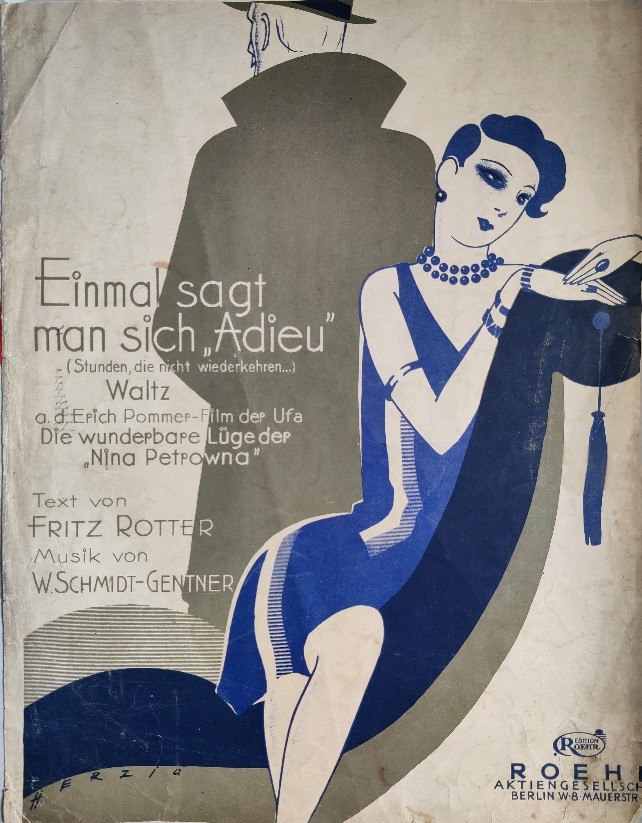
Figure 27. Sheet music for “Einmal sagt man sich Adieu.” Author’s collection.
Schmidt-Gentner’s “first hit song”179 was swiftly absorbed into the soundscape of popular melodies that he used for subsequent scores. In Adieu, Mascotte! (1929), it accompanied the lovers’ separation, alongside hits like “Paris, Du Stadt der Liebe” (for Parisian street scenes), “Schiebung,” “Feste, Maxe,” and “Gib ihm Saures” (for a race sequence), and waltzes from Eysler’s operetta Der lachende Ehemann (for the ending).180 The same was true of Der Sträfling aus Stambul (1929), for which the appearance of “Stunden, die nie wiederkehren” resonated with the meaning carried over from its previous use.181
This recycling of original film music was not unique. For the opening scenes of Asphalt, Schmidt-Gentner used the “machine music” from Gottfried Huppertz’s score for Metropolis (1927).182 An original melody Schmidt-Gentner composed for Frau im Mond (1929), given lyrics and published as “Heimlich singt für uns die Liebe,” became a recurring motif in his score for Wenn Du einmal Dein Herz verschenkst (1929). One critic regretted that “the substance of this music is not sufficient for such frequent repetition.”183 This would be a recurring complaint of Schmidt-Gentner’s scores in 1929. While audiences’ familiarity with music might bring added meaning, it was clearly detrimental for some critics. Instead of deepening the context for situations on screen, LichtBildBühne argued, Schmidt-Gentner’s “reliance on nothing but familiar melodies” rendered the impact of these cues in a film like Ich lebe für Dich (1929) “essentially pointless.”184
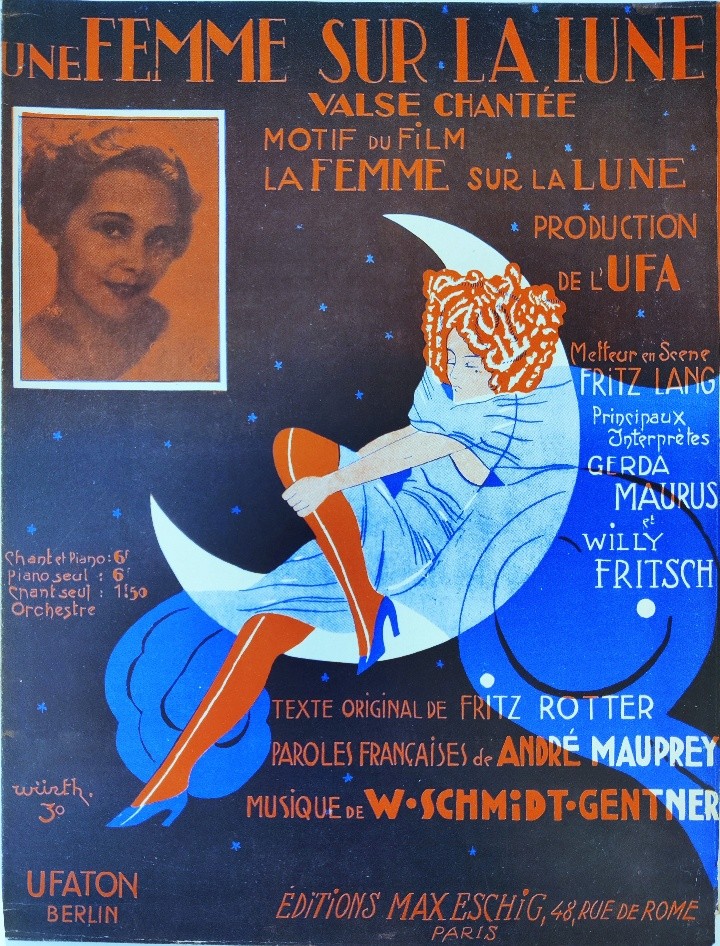
Figure 28. Sheet music for “Heimlich singt für uns die Liebe.” Author’s collection.
This was part of a broader critique of Schmidt-Gentner’s work that developed during his time at Ufa. In the pages of Der Film, Kurt London was the most outspoken critic of “the vastly overrated Schmidt-Gentner.” Attending the premiere of Manolescu (1929) in the Gloria-Palast, London detected a “downward spiral” in quality of his scores: “The man has clearly exhausted his [stock of] illustrations […]. We had to hear the same music for the umpteenth time; we had to hear R. Strauss’s Don Juan again during a seduction scene, the same worn-out theatrical themes, the same musical gestures and clichés.”185 It was not just the scores’ content, but their style that irked London. He associated them with the wider Ufa aesthetic of standardized, commercialized glamour. The music director was now part of a production line: “In all Ufa theatres, always: Schmidt-Gentner.” The orchestra had become a form of “tremendous spectacle,” with Schmidt-Gentner more a “circus” manager than a conductor. For London, the public adoration of this musical star was “incomprehensible”:
As Generalissimo of Ufa, he takes orchestral reinforcements from other cinemas, assembling a huge ensemble that he drills for premieres in keeping with his style. At these premieres sit a mass of people who know a great deal about film but very little about music, especially film music […]. They then allow themselves to be captivated by the orgy of sound that assaults them and thus report that Schmidt-Gentner has once again made magnificent music.186
His ire was particularly strong when important artistic productions were not given original scores. Considering the budget of Frau im Mond, London thought it “incomprehensible that [Fritz] Lang allowed this super-film to premiere with a compiled score.” Schmidt-Gentner’s huge orchestra (London counted 80 musicians) played music that was too loud, filled with “old cinema themes that had been in use for years.” Though there were “undoubtedly excellent passages” (such as the launch of the rocket), the whole was an inferior work.187 London detected the same blend of triviality and bombast in Silberkondor über Feuerland (1929), where Schmidt-Gentner “plays salon music while fishing for sharks,”188 and in Der Ruf des Nordens (1929), after which the critic pleaded for “a strong limitation of musical resources” to protect audiences’ eardrums.189 A related concern was that the scale of Schmidt-Gentner’s scores made them useless as models for provincial cinemas. Attending the premiere of Napoleon auf St. Helena (1929), London urged Schmidt-Gentner to “put aside his personal ambition.” Though his score for this “unmusical” film was respectable, it was unrealizable for any music director with normal resources.190
London was not alone in these concerns, though other critics were more balanced. The Reichsfilmblatt complained that the intimate drama of Asphalt “cannot tolerate the loud, bombastic music that Schmidt-Gentner used” in its climactic scenes. Yet the same review praises the vibrant, percussive orchestration of a passage that captured “the rhythm of the work and technology,” as well as the Boston waltz that matched the “sweet, lyrical” mood of the love scenes.191 More nuanced was Schmidt-Gentner’s score for the Harry Piel film Männer ohne Beruf (1929), which “utilizes every conceivable sound effect.” But these “sound effects” were tightly bound to the content and context of each scene: music tinged with orientalism for scenes of foreign crowds in the port of Marseille; dance music with tambourine for street entertainers; a Spanish dance for the lovers’ first encounter; a “hellish ensemble of brass, car horns, and tram bells” for the traffic jam in which they first kiss; popular songs and waltzes for romantic scenes. There was even a musical jibe at recorded sound, as Schmidt-Gentner characterized a jukebox being played on screen by “xylophone, cymbals, and triangle.”192
Reservations about such “effects” were amplified in another sense, as Schmidt-Gentner’s scores were multiplied across Ufa cinemas in Berlin. For another Harry Piel film, Die Mitternachts-Taxe (1929), Schmidt-Gentner’s music was performed simultaneously in two venues. Walter Winnig directed performances at the Kammerlichtspiele, Otto Stenzeel those at the Universum-Theater. Each took a different approach. Stenzeel followed the score without embellishment, while Winnig employed a “diverse array of noise instruments, such as bells, gunshots, etc., [and] he fires away enthusiastically.”193 In this case, complaints about the “constant honking” of street scenes were directed at particular performances.194 When Schmidt-Gentner conducted in person, however, his popularity with audiences is evident. The premiere of Die Schmugglerbraut von Mallorca (1929) “once again demonstrated the affection the audience at the Ufa-Palast am Zoo holds for Schmidt-Gentner.” Here, the “magnificently well-rehearsed ensemble” offered “a completely unified” experience of film and music.195
If these examples suggest a development of the “sound-film-like” approach to fiction films, Schmidt-Gentner sought a more abstract union of music and image for documentary films. Watching Die Wunder Asiens (1929), even the prickly Kurt London wrote that Schmidt-Gentner’s musical illustration “was evidently felt with deep inner compassion.” Eschewing “exotic music,” his choices were entirely sympathetic with the culture on screen.196 Another example was Mit Sven Hedin durch Asiens Wüsten (1928), a film documenting an expedition across Asia. Images of the Mongolian desert were accompanied by the first movement of Beethoven’s Symphony No. 5, as well as extracts from Stravinsky’s Firebird. The score also contained original compositions by Schmidt-Gentner, influenced by a recent Berlin performance of Tibetan musicians. Through combinations of woodwind and percussion, his orchestra imitated the sound of traditional monastery horns (dungchen), providing an effective balance between western and eastern timbres.197
More complex was the combination of live narration and music that accompanied Sagan om de sista örnarna (1923) at the Universum-Theater in June 1929. The film’s creator, Swedish ornithologist Bengt Berg, delivered a lecture that was both a history of his expedition to photograph eagles, a plea for conservation, and an essay on the moral lives of animals and men. This narration was interspersed with Schmidt-Gentner’s orchestral selection from the classical repertoire, including Beethoven’s Leonore overture.198 More Beethoven featured in his compilation for Pamir, Das Dach der Welt (1929), where he used the first movement of Symphony No. 3 alongside Russian music.199 In such examples, even London admitted that Schmidt-Gentner was “unrivalled” in his illustration of documentary films.200
This feeling for the drama of landscape was also evident at the premiere of Die weiße Hölle vom Piz Palü (1929) at the Ufa-Palast am Zoo. In the first avalanche sequence, London recalled that “the orchestra paused and only faint timpani rolls hinted at the horror of a natural disaster.” “I’ve never heard such a meaningful, long, and justified pause from Schmidt-Gentner before.”201 Lotte Spitz was similarly struck by the “small details” in this accompaniment. When the gaze of the bereaved Dr. Krafft is fixed on a dripping icicle, the score condensed into a single note that “bores relentlessly out of the orchestra,” “clinging to the ear like the image clings to the eye. […] [Here,] the viewer’s visual experience is unconsciously deepened by sound.”202 This was a “rare cinematic experience,” wrote Der Kinematograph. The only interruptions to the presentation were frequent acclamations for Schmidt-Gentner’s music. There was “a fear of disturbing the profound effect with applause, which then erupts with tremendous force.”203
Without the scores themselves, it is impossible to gauge the fairness of critical opinion. Yet there is enough evidence to suggest the insights offered by Schmidt-Gentner’s musical interpretation. An intriguing example is Die Büchse der Pandora, premiered at the Gloria-Palast in February 1929. LichtBildBühne was impressed with moments of eerie quiet, but not with the louder interventions and crescendos. The review cites the use of the third theme from Strauss’s Don Juan in the scene between Dr. Schön and Lulu in the prop room. This “conceptual continuation of the introductory music” is deemed an “unfortunate choice, since Dr. Schön is a victim, not a conqueror.”204 Yet Schmidt-Gentner’s interpretation is surely valid, and more interesting than assigning masculine victimhood: it is Schön who pursues Lulu, not vice versa. The tension between playfulness and tragedy was evidently a defining feature of this score. After “a few powerful, fateful chords” at the film’s opening, Waldemar Lydor defined its sound world as “relatively light.” Lulu was characterized by “graceful, bouncy melodies, which perfectly capture the carefree nature of this character,” while darker, heavier music was associated with the male characters. In a confrontation between Dr. Schön and his son, Schmidt-Gentner cited the motif of Alberich’s cave from Huppertz’s score for Die Nibelungen (1924).205 In its new context, this music marvellously suggests the jealous guarding of another kind of treasure. All these touches indicate the sophistication of Schmidt-Gentner as an interpreter of tone and meaning in silent film.
The coming of sound, 1929-1930
Schmidt-Gentner’s career in silent cinema was punctuated by encounters with recorded sound. At the Alhambra Kurfürstendamm in September 1922, his orchestra vacated their usual place for a screening of an experimental sound film showcasing synchronized musical performances. Fritz Olimsky noted ominously that “the most important aspect” of this demonstration was that “the cinema orchestra can be dispensed with in the future, since the accompanying music can simply be copied directly onto the filmstrip.”206 Another encounter occurred at the Capitol in November 1926, when Phoebus showed Der sprechende Film, a short sound experiment that (briefly) featured Schmidt-Gentner performing. Offering a series of exterior street scenes, followed by interior scenes of musicians singing and playing the piano, this film was received with curious scepticism.207 The thin, imbalanced soundscape seemed wholly inadequate next to live performance.
Two years later, however, Hollywood was embracing the new technology, and European industries were set to follow. Ufa was already producing its first synchronized films and planning to convert cinemas to sound exhibition. In July 1929, the month that Schmidt-Gentner’s initial contract was due to expire, his “high salary” of 4500RM was deemed not “necessary or supportable” in the context of sound technology. Not knowing his ability or availability for recording work, Ufa decided “to let the contract expire and, if necessary, to engage him on a case-by-case basis from sound film to sound film, especially since a fixed-term contract seems impractical given Herr Schmidt-Gentner’s financial management.”208 The relationship between both parties deteriorated during this transitional period, culminating in Ufa’s decision “to file criminal charges against Schmidt-Gentner” in December 1930.209
Though there is no record of the motivation for this incident, Job reveals how personally Schmidt-Gentner had taken Ufa’s commitment to sound. His employers ordered him “to make test recordings of all the acoustic systems and equipment under consideration and submit them to the management for evaluation.” All too aware that the purpose of these tests was the culling of live music in Ufa cinemas, Schmidt-Gentner told his wife he was becoming suicidal.210 The broader changes sweeping across German cinema were disastrous for many musicians, and even co-operative action struggled to protect the livelihoods of employees. In Munich, for example, the orchestra of the Phoebus-Palast was recognized as “a cultural asset” by the city’s cultural affairs department—just three weeks before it was disbanded.211
During this transitional period, Ufa also engaged Schmidt-Gentner to refit silent films with soundtracks combining music, sound effects, and speech. A prime example was Ungarische Rhapsodie. Having been edited to fit Schmidt-Gentner’s (live) score in 1928, in 1929 the film was re-edited to accommodate a music-and-effects soundtrack. Ufa was urging its technicians to finish this edition in time for exhibition at a convention in May 1929.212 A synchronized version of Nina Petrowna was also prepared, but neither this nor the synchronized Ungarische Rhapsodie appears to survive in archives.213 Reviewers of the synchronized Nina Petrowna highlighted the strangeness of hearing running water, doorbells, and drunken laughter while “people remain struck dumb.”214
Ufa was also marketing its films through sound recordings of tie-in songs. Schmidt-Gentner’s “Heimlich singt für uns die Liebe” (from Frau im Mond) and “Einmal sagt man sich Adieu” (from Nina Petrowna) were released commercially on 78RPM records, which were sold alongside printed scores in music shops and at cinemas.215 “Einmal sagt man sich Adieu” was especially popular: ten different vocal/orchestral versions were released in Germany across 1929-30, and five further versions with Finnish lyrics. This kind of promotion through sound technology was not confined to records. By the late 1920s, Schmidt-Gentner was performing for new audiences on the radio. Broadcast by Berlin Funk-Stunde, his regular “light music” slot with “the Schmidt-Gentner-Orchester” was transmitted across Germany—and beyond. (Radiowelt listings not only include German broadcasts but also details of frequencies from across Europe. Listeners might enjoy programmes of light music being broadcast anywhere from Birmingham to Riga.216) Notable amongst these programmes were multiple renditions of “Einmal sagt man sich Adieu.” But Schmidt-Gentner also performed the film music of other composers. “With the Schmidt-Gentner Orchester, one can always be assured of a well-chosen programme and exemplary execution,” wrote the Deutsche Allgemeine Zeitung, praising their performance of Arthur Honegger’s music for Napoléon.217
Schmidt-Gentner’s work in this period bears witness to the uneasy co-existence of silent and sound films in Ufa cinemas. Berlin audiences first saw The Jazz Singer in a silent version at the Gloria-Palast in September 1928. Its success was credited to the “brilliantly assembled and perfectly rendered” score by Schmidt-Gentner. “We strongly recommend that this musical accompaniment serve as a model throughout Germany,” said Der Kinematograph, especially since the composer had gone to great efforts to incorporate the “centuries-old melodies” of traditional Jewish music alongside modern jazz.218 When the synchronized version of The Jazz Singer was shown in November 1929, German reviewers were disappointed by the soundtrack, “whose tinny sound evokes a painful longing for Schmidt-Gentner’s Real-Orchestra.”219
Other hybrid films saw similar reactions. The press reported that “the pending sound film patent lawsuits” prevented the release of the synchronized version of 4 Devils (1928) in Germany.220 The film was thus “relegated to silence” when it premiered at the Universum-Theater in November 1929, and critics worried that they were missing a crucial aspect of Murnau’s design.221 As with Sunrise, Murnau’s name dominated press coverage; Schmidt-Gentner was absent from adverts, and the preceding stage act at the premiere (a group of circus performers) was cited more often than his music.222 Yet when 4 Devils began its second run in January 1930, the Universum-Theater advertised its live presentations in preference to new technology: “Attention! As long as sound films do not yet meet all legitimate demands regarding technical reproduction and realism, we prefer to present our esteemed audience with the outstanding achievements of the world’s best film companies accompanied by a musical illustration of unprecedented artistic perfection.”223 Schmidt-Gentner’s name now appeared on adverts, which state that his accompaniment was performed by a twelve-piece orchestra.224
Other events brought greater attention to live music. At the Universum-Theater in September 1929, there were two presentations of Alfred Hitchcock’s Blackmail (1929). At the first, the silent version of the film was accompanied by Schmidt-Gentner’s orchestral score. This was followed immediately afterwards by the sound version of the film. The audience was invited to vote on their preferred presentation: the version with Schmidt-Gentner’s live music won by 687 votes to 439.225 When White Shadows in the South Seas (1928) was presented at the Ufa-Pavillon in December 1929, critics could compare the experience of watching this silent version with the sound version seen elsewhere. The Ohligser Anzeiger was struck by the superiority of both the content and (especially) the sheer sound of Schmidt-Gentner’s live score: performed by an orchestra, it was “clearer and purer,” marvellously attuned to the mood and rhythm of the images.226
This became a recurrent theme of film exhibition in the last months of live accompaniment at Ufa cinemas. Though their numbers were being reduced, Ufa’s musicians were still employed in large numbers for silent film premieres. Experiencing Frau im Mond this way, reviews acknowledged Schmidt-Gentner’s “brilliant illustrations with the large Ufa orchestra. The difference between [this and] the synchronous music of sound films became tangible once again.”227 At screenings of Adieu, Mascotte! there were “thunderous ovations” for the orchestra that many interpreted as “demonstrations against sound film.”228 “Schmidt-Gentner proves that a live soundtrack is superior to the very finest sound film reproduction,” wrote Vorwärts.229 Before a screening of Nachtlokal (1929) at the Kammerlichtspiele, the three overtures performed by Schmidt-Gentner’s orchestra were acknowledged by “storms of applause” that one critic felt was “a demonstration against sound film and its mechanical music.”230 Since the majority of sound films being shown in Berlin were American imports, there was also an aspect of cultural distinction between modes of presentation. According to one review, Schmidt-Gentner’s score for Hot News (1928) at the Gloria-Palast “demonstrated the complete superiority of a good orchestra over American film music” presented in sound films.231
Ironically, his status as an exemplum of the power of live music made Schmidt-Gentner a useful promotional figure for sound exhibition. In March 1930, the Marmorhaus hosted a debate about the “poisoned chalice” of the new technology and its impact on German cinema. As a “finale” to the presentation, various experimental sound films were shown. The most well received were Schmidt-Gentner and Ufa’s “sound orchestra” performing the overture to Die lustigen Weiber von Windsor, together with a synchronized Mickey Mouse film.232 Even live performances might promote recorded sound. In July 1930, a Berlin concert led by Artur Guttmann showcased popular songs from sound films (including those by Schmidt-Gentner), as well as waltzes inspired by Mickey Mouse.233
Just as Disney were pioneering the precise co-ordination of music and animation in their series “Silly Symphonies” (1929-39), so Schmidt-Gentner’s work for sound films began to change his method and aesthetic goals. Listening to the synchronized version of Wenn Du einmal Dein Herz verschenkst (1929), Kurt London felt that Schmidt-Gentner’s flexibility with silent film music had given way to an overly “precise” matching of sound and images. And despite the attempt to create a balanced soundtrack, the music itself “was much too loud.”234 At the same time as Ufa were reducing the number of musicians in live exhibition, synchronized films were advertised through the size of their (invisible) orchestras. Recorded soundtracks enabled large-scale musical accompaniment to be experienced in any cinema, no matter how small. Promotional material for Der weiße Teufel (1930) cited the choir and 60-strong orchestra featured in Schmidt-Gentner’s synchronized music-and-effects soundtrack.235 Though such “silent” versions used intertitles rather than dialogue, the presence of sound fundamentally changed their nature. Das Flötenkonzert von Sans-souci (1930) was released in sound and synchronized versions. Though the latter has much more music arranged by Schmidt-Gentner, its frequent use of “natural” sounds and voices separates it from the context of live musical exhibition.
Amid the increase in synchronized and sound films, Ufa was still releasing a handful of major silents. On 16 April 1930, Mario Bonnard’s mountain film Die heiligen drei Brunnen premiered with live accompaniment at the Ufa-Palast am Zoo. Der Kinematograph praised Schmidt-Gentner’s “excellent” score and reported the enthusiastic applause given to the musicians.236 Schmidt-Gentner, however, was not present to receive this acclaim. Otto Stenzeel conducted Ufa’s orchestra, which critics noted had been rarely seen at the cinema in recent months. That evening, they “successfully fought for the honour of the well-illustrated silent film.”237 By this point, “honour” was all that was left. The “Schmidt-Gentner era” had come to an end.
Conclusion: Searching for Schmidt-Gentner
Willy Schmidt-Gentner moved to Vienna in 1933 and continued writing film music until his retirement in 1955, nine years before his death. Ever industrious, he provided music for over 100 sound films—and much of this work survives to be studied and enjoyed. But even this considerable legacy is dwarfed by his earlier output. My research indicates that Schmidt-Gentner oversaw or directly compiled music for over 300 silent feature films across 1920-30.238 At least two-thirds of this work is absent from modern databases, and—apart from a single cue sheet—all his scores are missing. Likewise unaccounted for are Schmidt-Gentner’s contracts, correspondence, personal papers, and music library.
This grievous loss to scholars, musicians, and audiences is also an injustice to Schmidt-Gentner. If he did not contribute to the theoretical development of film music like Hans Erdmann, or to the published catalogues of film music like Giuseppe Becce, he was nevertheless a major figure in Weimar musical life. The ephemeral nature of compilation scores should not obscure the endless creativity required to create them, nor the skill and intelligence of their interpretation. As Alexander Elster argued in March 1930, Schmidt-Gentner’s work has every right to be considered “original”:
For a mere juxtaposition of familiar music that loosely fits the sequence of images, authorship is not a consideration; however, it is self-evident in the compositions of Schmidt-Gentner and others who, while closely following the film’s narrative and often lacking any ambition of particular novelty in their music, have nevertheless created an original work whose form is based on personal invention.239
To re-evaluate the nature of Schmidt-Gentner’s musical invention, more primary evidence must be found. Notwithstanding the inevitable material and cultural losses across the intervening century, it beggars belief that so little should survive. I therefore conclude with an appeal to readers to come forward with evidence of Schmidt-Gentner’s early career. Alongside documents and scores from this period, audio material from the synchronized versions of Ungarische Rhapsodie and Nina Petrowna would be especially valuable. The sheer volume of Schmidt-Gentner’s work should give hope that more may be rediscovered. His music deserves to be heard again.
Acknowledgements
I offer my sincere thanks to the many institutions and individuals that have aided my research, both in person and via correspondence. In Austria: Aldijana Becirovic, Kristina Höch, and Christina Schnitzhofer of Filmarchiv Austria; Stefan Schmidl generously shared his knowledge of Schmidt-Gentner’s musical estate. In Germany, Heike Thörner and the staff of the Bundesarchiv; the staff of the Deutsche Kinemathek, especially Giulia Warmbrunn; Nele Stöhr of the Staatsarchiv Hamburg; Luciano Palumbo and Carmen Prokopiak of the Friedrich-Wilhelm-Murnau-Stiftung; Lutz Graf of the Thüringer Rennsteigverein; Nina Goslar and Uwe Völmecke offered great help and encouragement with this project. In Hungary, Janka Barkóczi of the National Film Institute. In Russia, Alexandra Ustyuzhanina of Gosfilmofond. In Sweden, the staff of the National Library. In the UK, Kathleen Dickson of the BFI.
Footnotes
1 An excellent survey of recent research in this area can be found in Francesco Finocchiaro, Durch einen Gazeschleier: Ästhetik der Filmmusik in der Stummfilm-Ära (edition text+kritik, 2026), 7-18.
2 Der Kinematograph (7 February 1926).
3 Stefan Schmidl and Timur Sijaric, “Subversive obedience: The film music of Willi Forst’s Viennese Trilogy,” Studia Musicologica Labacensia 5 (2021), 127-43; Stefan Schmidl and Timur Sijaric (eds), Willy Schmidt-Gentner: Der Postmeister (Filmarchiv Austria, 2021).
4 Stefanie Job, Die vernachlässigte Muse. Romanbiographie des Filmmusikers und UFA-Generalmusikdirektors Willy Schmidt-Gentner (Frieling, 1995). Born Štefanija Vidačić in Austria-Hungary, Job came to fame as “Miss Europe” in 1927 and had a brief career acting in Germany under the name Steffie Vida. Her marriage to Schmidt-Gentner lasted from 1932 until 1942.
5 Job, Die vernachlässigte Muse, 26-30.
6 Hanns Brodnitz, Kino intim: Eine vergessene Biographie, ed. Gero Gandert and Wolfgang Jacobsen (Hentrich & Hentrich, 2005), 21; Heiko Bockstiegel, Schmidt-Boelcke dirigiert. Ein Musikerleben zwischen Kunst und Medienlandschaft (J.L. Grimm, 1994), 23.
7 I make this identification based on the superb database of German cinemas compiled by Klaus Weber: ALLEKINOS, www.allekinos.com.
8 Berliner Tageblatt und Handels-Zeitung (22 October 1918), Berliner Börsen-Zeitung (28 August 1919).
9 Dresdner neueste Nachrichten (15 February 1921), Deutscher Reichsanzeiger und Preußischer Staatsanzeiger (30 July 1921), Berliner Börsen-Zeitung (24 January 1922).
10 Berliner Tageblatt und Handels-Zeitung (6 September 1921).
11 Vorwärts (2 October 1921). See also Freiheit (4 October 1921).
12 Berliner Börsen-Zeitung (19 February 1922).
13 Berliner Börsen-Zeitung (17 February 1921), Deutscher Reichsanzeiger und Preußischer Staatsanzeiger (8 December 1921), Berliner Börsen-Zeitung (30 December 1921).
14 See Deutsche Allgemeine Zeitung (27 January and 21 February 1922), Berliner Börsen-Zeitung (31 January 1922), Berliner Tageblatt und Handels-Zeitung (21 and 24 February 1922).
15 Berliner Börsen-Zeitung (24 February 1922), Film-Kurier (24 February 1922).
16 Berliner Börsen-Zeitung (12 March 1922).
17 Berliner Börsen-Zeitung (25 August 1922).
18 Berliner Börsen-Zeitung (15 February 1923).
19 Freiheit (27 July 1922).
20 Berliner Börsen-Zeitung (6 August 1922).
21 Job, Die vernachlässigte Muse, 33-4.
22 Berliner Börsen-Zeitung (19 July 1922), Berliner Börsen-Zeitung (21 July 1922), Berliner Tageblatt und Handels-Zeitung (23 July 1922), Der Kinematograph (6 August 1922).
23 Job, Die vernachlässigte Muse, 35.
24 Vorwärts (10 September 1922).
25 Der Kinematograph (17 September 1922).
26 Ibid.
27 Deutsche allgemeine Zeitung (28 March 1922).
28 Der Kinematograph (16 April 1922).
29 Berliner Tageblatt und Handels-Zeitung (23 April 1922).
30 Der Kinematograph (29 October 1922), Der Kinematograph (1 April 1923).
31 Berliner Tageblatt und Handels-Zeitung (8 July 1923).
32 Berliner Tageblatt und Handels-Zeitung (5 July 1923).
33 Berliner Börsen-Zeitung (13 July 1923).
34 Ibid.
35 Rudolf Bernauer, Das Theater meines Lebens: Erinnerungen (Blanvalet, 1955), 392.
36 Berliner Börsen-Zeitung (13 July 1923).
37 Brodnitz, Kino intim, 15.
38 Berliner Börsen-Zeitung (27 May 1924).
39 Berliner Börsen-Zeitung (31 August 1924).
40 Brodnitz, Kino intim, 21-2.
41 Berliner Börsen-Zeitung (1 October 1923), Berliner Tageblatt und Handels-Zeitung (2 October 1923).
42 Berliner Börsen-Zeitung (16 September 1923).
43 Deutsche allgemeine Zeitung (11 May 1924).
44 Bockstiegel, Schmidt-Boelcke dirigiert, 24.
45 Berliner Börsen-Zeitung (28 February 1925).
46 Berliner Börsen-Zeitung (13 March 1925), Berliner Tageblatt und Handels-Zeitung (15 March 1925)
47 Der Film (15 June 1929).
48 Bockstiegel, Schmidt-Boelcke dirigiert, 24-5.
49 Film-Kurier (21 July 1925).
50 Berliner Tageblatt und Handels-Zeitung (20 November 1923), Berliner Tageblatt und Handels-Zeitung (3 December 1924).
51 Berliner Börsen-Zeitung (8 November 1923), Berliner Börsen-Zeitung (27 January 1924), Berliner Börsen-Zeitung (11 February 1924).
52 Deutsche Allgemeine Zeitung (16 October 1923), Vorwärts (24 December 1924).
53 Vorwärts (22 June 1925), Berliner Börsen-Zeitung (27 June 1925).
54 Evening Star (Washington, DC) (26 June 1925).
55 LichtBildBühne (1 March 1924).
56 Berliner Börsen-Zeitung (2 November 1924).
57 Das Kino-Journal (14 March 1924).
58 Ibid.
59 Ibid.
60 Bockstiegel, Schmidt-Boelcke dirigiert, 22-3.
61 Berliner Börsen-Zeitung (17 July 1923).
62 Der Kinematograph (30 November 1924).
63 Deutsche Allgemeine Zeitung (21 July 1924).
64 Der Kinematograph (9 September 1923).
65 Berliner Börsen-Zeitung (6 February 1924).
66 Berliner Börsen-Zeitung (9 July 1924).
67 Berliner Tageblatt und Handels-Zeitung (29 March 1925).
68 Reichsfilmblatt (4 April 1925).
69 Der Kinematograph (19 August 1923).
70 Der Filmbote (18 April 1925).
71 Der Kinematograph (22 March 1925).
72 Berliner Börsen-Zeitung (26 July 1925), Der Kinematograph (16 August 1925).
73 Berliner Tageblatt und Handels-Zeitung (27 September 1925).
74 Berliner Börsen-Zeitung (3 October 1925).
75 Deutsche allgemeine Zeitung (21 December 1925).
76 Berliner Börsen-Zeitung (21 December 1925).
77 Berliner Tageblatt und Handels-Zeitung (21 December 1925), Vorwärts (25 December 1925), Die Weltbühne (29 December 1925).
78 Tracey Goessel, The First King of Hollywood: The Life of Douglas Fairbanks (Chicago Review Press, 2016), 353.
79 Der Kinematograph (25 October 1925), Berliner Tageblatt und Handels-Zeitung (20 December 1925), Der Kinematograph (13 December 1925).
80 Badischer Beobachter (25 November 1925).
81 Neue Mannheimer Zeitung (31 July 1926).
82 Neue Mannheimer Zeitung (18 August 1926).
83 Vorwärts (23 August 1925), Der Kinematograph (6 September 1925).
84 Der Kinematograph (20 June 1926), Münchner neueste Nachrichten (2 July 1926).
85 Münchner neueste Nachrichten (2 July 1926), Der Filmbote (24 July 1926).
86 Münchner neueste Nachrichten (4 August 1926).
87 Der Kinematograph (19 December 1926).
88 Münchner neueste Nachrichten (22 December 1926).
89 Der Kinematograph (26 September 1926).
90 Der Kinematograph (14 February 1926).
91 Der Kinematograph (13 September 1925), Der Kinematograph (21 February 1926), Der Kinematograph (25 April 1926).
92 Job, Die vernachlässigte Muse, 82-3.
93 Berliner Börsen-Zeitung (23 June 1926).
94 Der Kinematograph (19 July 1925).
95 Münchner neueste Nachrichten (2 July 1926).
96 Job, Die vernachlässigte Muse, 35.
97 Uj Nemzedék (25 October 1928).
98 Der Kinematograph (14 February 1926).
99 Der Kinematograph (23 May 1926), Der Kinematograph (22 August 1926).
100 Hamburger Fremdenblatt (26 January 1927).
101 Berliner Tageblatt und Handels-Zeitung (23 May 1926).
102 Der Kinematograph (11 April 1926).
103 Film-Kurier (29 May 1927).
104 Der Kinematograph (25 April 1926).
105 Berliner Tageblatt und Handels-Zeitung (5 May 1928).
106 Quoted in Der Kinematograph (20 November 1927).
107 Berliner Morgenpost (20 November 1927).
108 Tägliche Rundschau (20 November 1927).
109 Cinema (Bucharest) (22 September 1928); Rampa (22 October 1928); Voinţa Banatului (4 November 1928). Unfortunately, reviews of the first performances in Bucharest in November do not mention the music. In December the film began its general release at the Trianon cinema with music by I. Dattelbaum. See Curentul (4 December 1928).
110 Berliner Tageblatt und Handels-Zeitung (18 January 1926).
111 Der Kinematograph (7 February 1926).
112 Berliner Börsen-Zeitung (16 August 1927).
113 Berliner Tageblatt und Handels-Zeitung (11 September 1928).
114 Deutsche Allgemeine Zeitung (6 September 1927).
115 Dortmunder Zeitung (16 September 1927).
116 Castrop-Rauxeler Volkszeitung (8 September 1927).
117 Berliner Tageblatt und Handels-Zeitung (5 May 1928).
118 Ibid.
119 Ibid.
120 Westfälische neueste Nachrichten (29 February 1928).
121 Berliner Tageblatt und Handels-Zeitung (18 February 1928).
122 Berliner Tageblatt und Handels-Zeitung (15 June 1928).
123 “Musik-Aufstellung von Kapellmeister Schmidt-Gentner zu dem B.I.S. Film ‘Die Weber’,” Deutsche Kinemathek, Berlin (hereafter cited as DK).
124 Berliner Morgenpost (17 May 1927).
125 Tägliche Rundschau (17 May 1927).
126 Die Weltbühne (31 May 1927).
127 Vossische Zeitung (16 May 1927).
128 Emil Leimdörfer, “Die verfilmten ‘Weber’,” Die Bühne, no. 135 (1927), 25.
129 Tägliche Rundschau (17 May 1927).
130 Berliner Tageblatt und Handels-Zeitung (15 June 1928).
131 Berliner Tageblatt und Handels-Zeitung (18 February 1928).
132 “Nach der Premiere,” Mein Film, no. 123 (1928), 4.
133 Der Kinematograph (21 August 1927).
134 Délibáb (24 April 1928).
135 Reichsfilmblatt (14 May 1927).
136 Job, Die vernachlässigte Muse, 43.
137 Marie-Luise Bolte, “Sinfonik und Tarifvertrag: Kinomusik für Stummfilme,” in Hans-Michael Bock and Michael Töteberg, eds., Das Ufa-Buch: Kunst und Krisen, Stars und Regisseure, Wirtschaft und Politik (Zweitausendeins, 1992), 148-50.
138 Ufa board meeting, 21 June 1928, R109-1/1026b, Bundesarchiv, Berlin (hereafter cited as BArch).
139 Ufa board meeting, 25 June 1928, R109-1/1027a, BArch.
140 “Schmidt-Gentner bei der Ufa”, Mein Film, no. 138 (1928), 8.
141 Berliner Tageblatt und Handels-Zeitung (11 September 1928).
142 Der Kinematograph (12 July 1928).
143 Film-Kurier (28 March 1928).
144 Job, Die vernachlässigte Muse, 56.
145 Der Kinematograph (17 July 1928), Der Kinematograph (12 August 1928).
146 Der Kinematograph (5 August 1928).
147 Berliner Tageblatt und Handels-Zeitung (11 September 1928).
148 Der Kinematograph (5 August 1928).
149 Film-Kurier (13 December 1928).
150 Der Kinematograph (16 December 1928), Vorwärts (13 December 1928).
151 Süddeutsche Zeitung (1 December 1928).
152 Berliner Morgenpost (25 November 1928), Süddeutsche Zeitung (1 December 1928).
153 Berliner Morgenpost (25 November 1928).
154 Der Kinematograph (25 November 1928).
155 Vorwärts (23 November 1928).
156 Reichsfilmblatt (25 August 1928).
157 Pour Vous (17 October 1929).
158 Film-Kurier (9 November 1929).
159 Berliner Börsen-Zeitung (3 November 1928).
160 Ufa board meeting, 9 November 1928, R109-1/1027a, BArch. See also Uj Nemzedék (8 November 1928).
161 Programme for Ungarische Rhapsodie, Ufa-Palast am Zoo, 4.3-88/9, DK.
162 Berliner Börsen-Zeitung (24 November 1928).
163 Film-Kurier (6 November 1928).
164 Berliner Morgenpost (8 November 1928).
165 Uj Nemzedék (8 November 1928).
166 Deutsche allgemeine Zeitung (6 November 1928).
167 Berliner Börsen-Zeitung (6 November 1928).
168 Színházi Élet (4 November 1928); Budapesti Hírlap (9 November 1928); Magyar Hírlap (9 November 1928)
169 Hamburgischer Correspondent und Hamburgische Börsen-Halle (17 November 1928).
170 Hamburger Echo (17 November 1928).
171 Ann-Kristin Wallengren, En afton på Röda Kvarn. Svensk stumfilm som musikdrama, PhD Thesis (Lund University, 1998), 133-43.
172 Dagens Nyheter (5 January 1929).
173 “Musikprogram för Ungersk Rapsodi,” 1929, 4.3-88/9, DK.
174 Berliner Tageblatt und Handels-Zeitung (11 November 1928).
175 Svenska dagbladet (18 January 1929), Aftonbladet (24 January 1929).
176 Reichsfilmblatt (27 April 1929).
177 Job, Die vernachlässigte Muse, 56.
178 Reichsfilmblatt (27 April 1929).
179 Job, Die vernachlässigte Muse, 56.
180 Reichsfilmblatt (10 August 1929).
181 Reichsfilmblatt (7 September 1929).
182 Reichsfilmblatt (23 March 1929).
183 Der Film (25 January 1930).
184 LichtBildBühne (7 September 1929).
185 Der Film (1 September 1929).
186 Ibid.
187 Der Film (19 October 1929).
188 Der Film (16 November 1929).
189 Der Film (28 September 1929).
190 Der Film (16 November 1929).
191 Reichsfilmblatt (23 March 1929).
192 Reichsfilmblatt (17 August 1929).
193 LichtBildBühne (23 March 1929).
194 Reichsfilmblatt (16 February 1929).
195 LichtBildBühne (10 August 1929).
196 Der Film (8 February 1930).
197 Der Film (15 June 1929).
198 Der Kinematograph (24 June 1929), Der Kinematograph (1 July 1929).
199 Der Film (1 July 1929).
200 Der Film (16 November 1929).
201 Ibid.
202 Vossische Zeitung (24 November 1929).
203 Der Kinematograph (16 November 1929). See also LichtBildBühne (16 November 1929).
204 LichtBildBühne (16 February 1929).
205 Reichsfilmblatt (23 February 1929).
206 Berliner Börsen-Zeitung (18 September 1922). See also Vorwärts (19 September 1922).
207 Vorwärts (5 December 1926).
208 Ufa board meeting, 1 July 1929, R109-1/1027b, BArch.
209 Ufa board meeting, 19 December 1930, R109-1/1027b, BArch.
210 Job, Die vernachlässigte Muse, 59-61.
211 Der Kinematograph (16 November 1929).
212 Ufa board meeting, 28 March 1929, R109-1/1027a, BArch.
213 The most complete version of the silent Ungarische Rhapsodie is currently held by the Bundesarchiv. At least four copies of Hungarian Rhapsody survive, though Paramount’s original sound discs are much rarer. (A set held by the BFI are not accessible for study.)
214 Vossische Zeitung (6 June 1930).
215 “Silent Films’ Songs on 78RPM Record,” The Film Music Museum, https://fimumu.com/lists/silent78s-song.html. Recordings of both songs can be found online. For example, see: https://www.youtube.com/watch?v=WLmieikvP7w and: https://www.youtube.com/watch?v=QS8WKF32hYc.
216 Radiowelt (15 December 1928).
217 Deutsche Allgemeine Zeitung (23 December 1929).
218 Der Kinematograph (20 September 1928).
219 Deutsche Allgemeine Zeitung (30 November 1929).
220 Berliner Börsen-Zeitung (24 November 1929).
221 Film-Kurier (21 November 1929).
222 Berliner Morgenpost (24 November 1929).
223 Westfälische Zeitung (2 January 1930).
224 Westfälische Zeitung (3 January 1930).
225 Badische Presse (13 September 1929). See also Der Kinematograph (10 September 1929).
226 Ohligser Anzeiger (31 December 1929).
227 Ohligser Anzeiger (24 October 1929).
228 Der Kinematograph (5 August 1929).
229 Vorwärts (3 August 1929).
230 Berliner Börsen-Zeitung (27 July 1929).
231 Vorwärts (23 July 1929).
232 Der Kinematograph (13 March 1930).
233 Der Kinematograph (21 July 1930).
234 Der Film (25 January 1930).
235 Westfälische Zeitung (24 January 1930).
236 Der Kinematograph (17 April 1930).
237 Film-Kurier (17 April 1930).
238 A list of these films is available online: https://therealmofsilence.com/willy-schmidt-gentner/.
239 Deutsche Allgemeine Zeitung (11 March 1930).
About the Author
Paul Cuff is a film historian from the United Kingdom, specializing in silent and early sound cinema. His publications include numerous articles and three books, most recently Rediscovering Brigitte Helm: Film Performance and Stardom, 1915-1935 (McFarland, 2026). He also writes the blog The Realm of Silence, through which he can be contacted: https://therealmofsilence.com/contact/.